
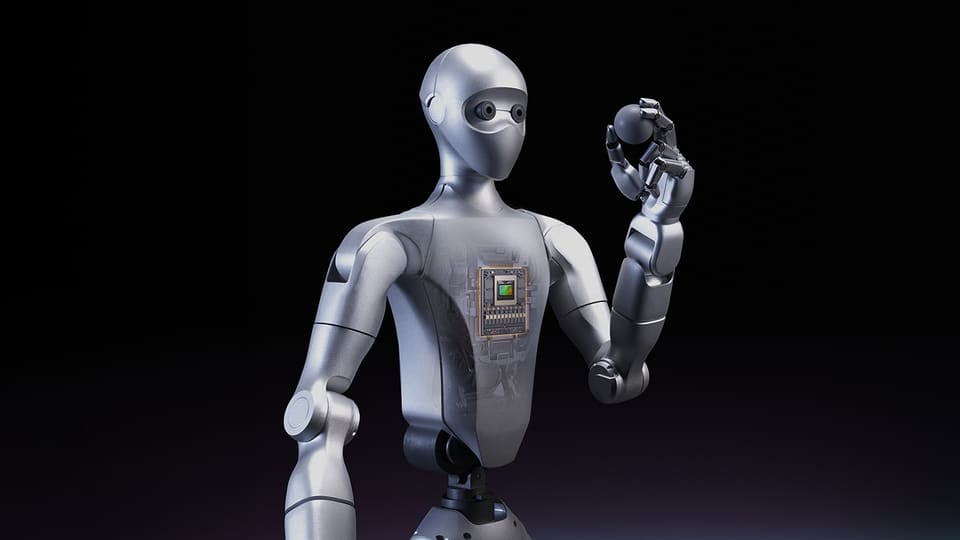
NVIDIA Announces NVIDIA Isaac GR00T Reference Humanoid Robot for Academic Research
NVIDIA has announced the NVIDIA Isaac GR00T Reference Humanoid Robot, marking the introduction of the first open humanoid robot reference design. This platform is built upon the NVIDIA Jetson Thor computer and the NVIDIA Isaac GR00T open development platform, providing a comprehensive foundation for academic research in the field of robotics.
A New Foundation for Robotics Research
The NVIDIA Isaac GR00T Reference Humanoid Robot is designed to serve as a versatile tool for researchers. By utilizing the NVIDIA Isaac GR00T open development platform, the system offers an accessible framework for those working to advance humanoid robotics. The integration of the NVIDIA Jetson Thor hardware provides the necessary computational power to support complex robotic tasks and development cycles.
Advancing Semiconductor Design and Manufacturing
In a separate development, NVIDIA and TSMC have collaborated to integrate artificial intelligence into semiconductor fabrication facilities. This initiative is aimed at advancing the processes involved in semiconductor design and manufacturing. By applying AI technologies within these specialized environments, the partnership seeks to enhance the efficiency and precision of chip production.
The implementation of these AI-driven solutions reflects a broader effort to optimize the manufacturing lifecycle. By leveraging the combined expertise of NVIDIA and TSMC, the project focuses on addressing the technical challenges inherent in modern semiconductor fabrication, ultimately supporting the evolution of high-performance computing hardware.