
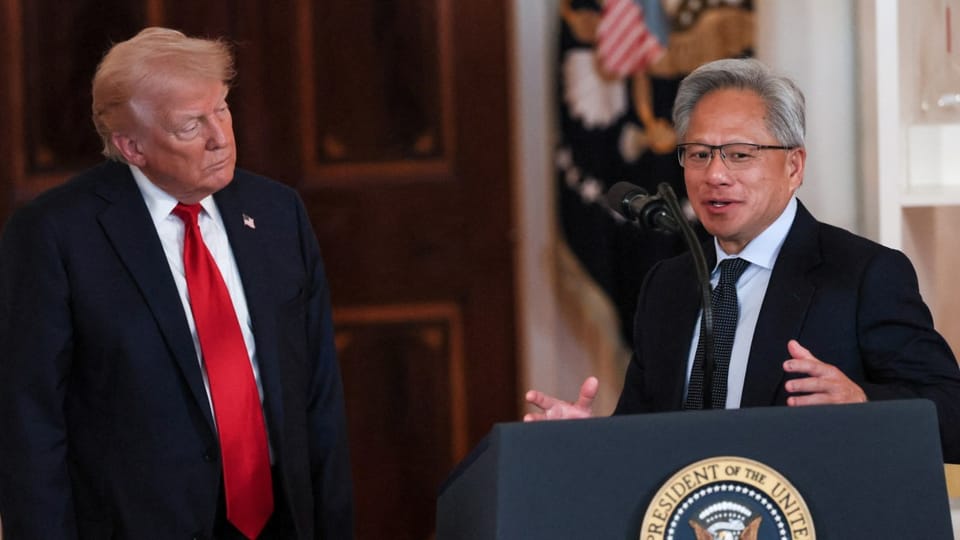
President Donald Trump called Nvidia CEO Jensen Huang during the All-In Summit on Monday, and Huang put the conversation on speakerphone for the industry audience. The exchange became an impromptu defense of rapid AI development, with Trump dismissing fears about the technology’s safety and urging the United States to stay ahead of China. as reported by Nbcnews Trump described concerns that AI could threaten humanity as a “hoax,” arguing that critics may be helping political opponents or China. “The robots will not be taking over. The AI will not be taking over the rest of the world,” he said during the call.
A public call about the AI race
Trump told Huang that the United States needed to win the competition over AI innovation and development. Huang agreed with Trump’s position and said Nvidia would work to ensure that “everybody wins in the AI race in America.”
That ambition reaches beyond technology companies, according to Huang’s comments. He said the goal was to benefit “every industry, every company, every state, every people.”
The call was recorded as Huang was making a podcast, and video of the exchange was posted on X before being reposted by the Trump War Room account, which is associated with a Trump-aligned PAC. Nvidia said it had no comment on the conversation or on whether Huang and Trump would soon meet to discuss AI.
Trump’s case for data centers
Trump also used the conversation to defend data centers, which have become politically unpopular in some communities. He called them “great” and said they make people and states wealthy.
“It’s the oil of the next 20, 25 years,” Trump said, adding that data centers were bigger than the internet and AI. He also cautioned that development should be handled “prudently” and that people needed to be “a little careful.” The ai hardware story also surfaces in Japan Partners With NVIDIA to Accelerate..., adding another angle.
The remarks reflect the infrastructure demands behind the AI race. Nvidia makes the chips and hardware used to build AI systems, while data centers provide the facilities where those systems are developed and operated.
Safety concerns remain unresolved
Trump’s comments came as other prominent AI leaders were calling for stronger safeguards. Anthropic CEO Dario Amodei argued in an essay over the weekend that AI development needed protections. Tesla CEO Elon Musk and OpenAI CEO Sam Altman endorsed the essay, while researchers at leading AI companies stepped down from their jobs and raised concerns about risks to humanity.
House Speaker Mike Johnson, Republican of Louisiana, said industry leaders should take the lead on AI safety after House Democrats urged lawmakers to return from recess early to address the issue. Johnson also said Trump would call a meeting with AI leaders. A person familiar with the matter said the meeting was being planned, but no timing had been set.
Huang has a direct connection to the administration beyond Nvidia’s role in AI hardware. He sits on Trump’s council of science and technology advisers and previously helped persuade Trump not to send National Guard troops to San Francisco. Huang has also lobbied lawmakers to allow Nvidia product sales around the world, a position some lawmakers have said could benefit China and weaken U.S. technology leadership.
Trump’s call therefore left two questions open: how far the administration will go in accelerating AI infrastructure, and whether its planned discussions with industry leaders will address the safety concerns Trump has called a hoax.