
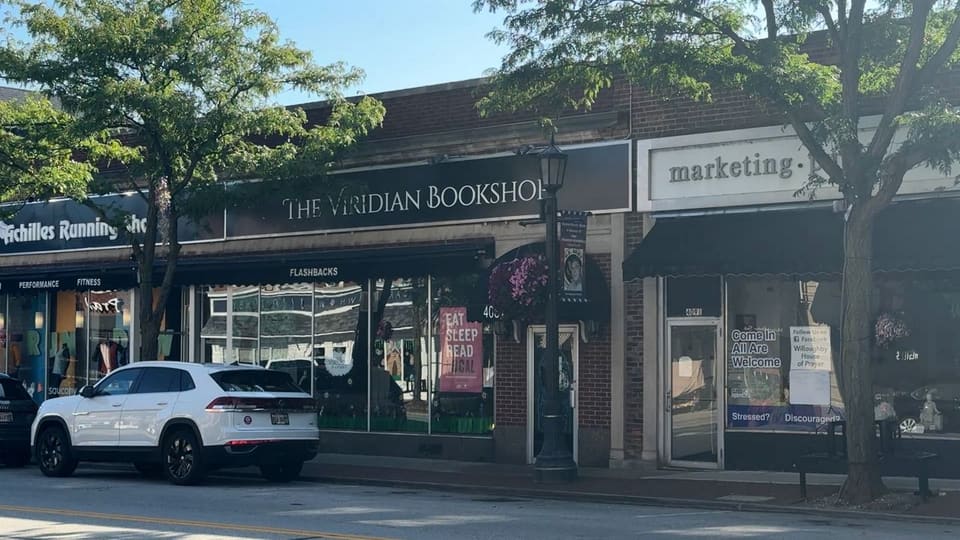
Ohio business says inaccurate Google AI summary of store is hurting sales
BY
Nora McKeown
Cleveland The Policy & Regulation story also surfaces in EU Regulators Demand Apple and Google..., adding another angle.
PUBLISHED 5:38 PM ET Jul. 23, 2026 PUBLISHED 5:38 PM EDT Jul. 23, 2026 SHARE WILLOUGHBY, OH — The owner of a local bookstore is fighting for answers about inaccuracies in an artificial intelligence (AI) summary of her business that she believes are negatively affecting sales. The original reporting from spectrumnews1.com provides the source detail behind this update.
“The fact that we know about it, we are fighting it and the community is rallying behind us is the reason that we’re able to continue to be in business,” said Chanel Bush, who opened the Viridian Bookshop in Downtown Willoughby late last year.
About a week ago, she said a customer told her that the Google AI summary of the store wrongfully claimed the bookshop was permanently closed and located at an incorrect address a few doors down. The customer, who trusted the AI summary, said it prevented her from visiting the store a few weeks ago.
Bush noticed sales declining before she learned of the errors and assumed she was doing something wrong as a new small business owner. Now, she attributes a significant portion of the loss to the inaccurate Google AI summary. To see google in practice, INSANE New AI Flowchart Generator (AI... walks through a concrete example.
“I was shocked. I was confused,” Bush said. “But also in some way, a little validated because our business had seriously declined.” Google’s AI summaries often appear at the top of the webpage and are meant to be a synopsis of key information on a topic. The results can vary from person to person. Bush said she’s tried everything she can think of to fix the error, including repeatedly reporting the inaccuracies, filling out Google’s complaint form, crowdsourcing ideas from followers on social media and even chatting with the AI bot to try to get to the root of the problem. As of Thursday morning, the search from her phone was still incorrect.
“They don’t make it easy to get help,” she said.
Michael Goldberg, a professor at Case Western Reserve University’s Weatherhead School of Management, said when it comes to regulation of AI, “It’s a little bit of the wild, wild west right now.”
He said companies like Google, ChatGPT and Claude don’t have a good helpline to call in cases like this one, making it even harder for small businesses to navigate a rapidly changing tech landscape. “We just don’t have the regulatory support that would really force the big tech companies in these cases to be more supportive and reactive,” he said. “So, I think it’s still evolving.” As she awaits a resolution, Bush is posting on social media to let people know they’re still open. She said her community has turned a difficult situation into something positive. “Since posting about this, we’ve generated the most online traffic that we ever have, except for when we first opened,” she said. To see google in practice, Note-Taking is Dead walks through a concrete example.
But she’s also heard from other business owners who say they’re dealing with similar problems.
“The more voices that talk about this issue, the more likely we can hopefully get it resolved,” she said. “Not just for us, but for other businesses.”
Google did not respond to Spectrum News 1’s request for comment before this article was published.