
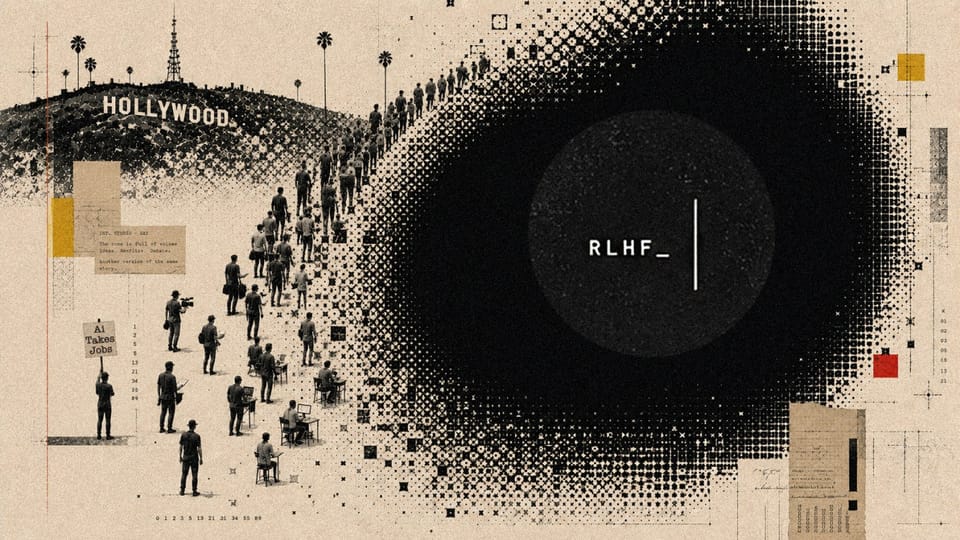
As the traditional film and television job market continues to narrow, a growing number of Hollywood writers, editors, and industry veterans are turning to a controversial side hustle: training generative AI models. These professionals are increasingly participating in Reinforcement Learning from Human Feedback (RLHF), a process that involves fine-tuning AI systems by correcting their outputs, even as many in the creative community fear the technology could lead to their own professional obsolescence.
The Rise of AI Training Gigs
For many entertainment workers, the decision to enter the AI training space is driven by economic necessity as standard industry work dries up. Writers like Ruth Fowler have publicly discussed taking these roles to cover basic living expenses, while others, such as editor Gabe Sena and former development executive Steven Woolworth, view the work as a way to stay relevant in a shifting technological landscape. These roles are often facilitated through platforms like Mercor, a firm that has seen significant venture capital backing and aims to organize human intelligence to power the AI economy.
The nature of the work involves a repetitive, often mind-numbing process where humans score AI responses to prompts. While some workers find the experience intellectually curious, others describe it as a grueling psychological exercise. One veteran writer compared the environment to a high-stakes, restrictive standardized test, noting the mental toll of repeatedly correcting a machine’s errors.
A Complex Ethical Dilemma
The trend has sparked intense debate within the creative community. While some view the participation of industry professionals as a pragmatic response to a systemic downturn, others argue that it risks accelerating the displacement of human labor. Tim Friedlander, who leads the National Association of Voice Actors, warns that while these gigs may offer short-term financial relief, they could have damaging long-term consequences for the creative sector.
Despite these concerns, major Hollywood unions have remained largely silent or declined to comment on whether they have a formal policy regarding members working in AI training. The situation presents a difficult Catch-22 for organizations like the Writers Guild of America, which must balance advocacy against AI systems with the reality that their members are struggling to find work and are seeking income wherever it is available.
Looking Toward an Uncertain Future
The impact of RLHF on the future of creative work remains an open question. While AI companies are actively seeking subject matter experts to improve their models, engineers note that the technology still faces significant challenges, such as sycophancy, where a model may simply agree with a human trainee rather than providing accurate output.
For now, the growth of AI-related job postings in the arts sector suggests that this trend is unlikely to disappear. As data from the platform Indeed shows, the share of AI-related job postings in the arts category doubled between May 2025 and April 2026. For many entertainment workers, the choice to engage with these systems is not born of a desire to undercut their peers, but rather a survival strategy in a system where AI adoption is moving forward regardless of individual participation.
Related Franklin coverage
- Meta Developing AI Powered Prediction Market App Called Arena for Virtual Betting
- US government authorizes release of Anthropic Claude Mythos 5 to select institutions
- Voters across the political spectrum demand stricter government oversight of powerful AI systems
Primary source: hollywoodreporter.com