
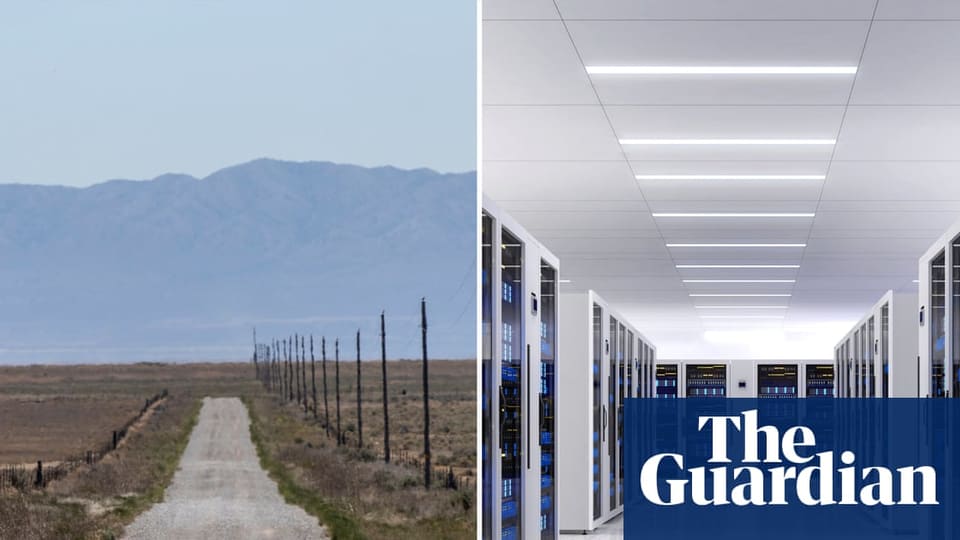
A Guardian analysis has revealed that the majority of planned artificial intelligence datacenters in the United States are slated for construction in regions currently suffering from drought. Out of 809 proposed facilities, 517 are located in areas that have experienced drought conditions over the past year. This trend has sparked growing public outcry as the industry faces scrutiny over the massive volumes of water required to cool the high-powered computing arrays that drive AI technology.
The Growing Water Demand
Large datacenters can consume up to 5 million gallons of water daily to manage the heat generated by their equipment, an amount equivalent to the daily usage of 50,000 people. Researchers estimate that a single 100-word AI prompt consumes roughly one 500ml bottle of water due to these cooling requirements. Projections indicate that the total water demand for US datacenters could reach 73 billion gallons annually by 2028, a significant increase from the 17 billion gallons used in 2023.
Experts warn that this surge in demand is occurring as the climate crisis intensifies, leading to more frequent and severe droughts. Christopher Dalbom, an expert in water resources law at Tulane University, noted that the industry is expanding rapidly in areas already facing water scarcity, creating an inevitable "crunch point" where resources must be shared between residents, agriculture, and the tech sector.
Local Opposition and Economic Trade-offs
The expansion of these facilities has met with significant resistance, particularly in rural and conservative communities. Ranchers and farmers have expressed concern that their water access is being prioritized behind the needs of the AI industry. In Utah, the proposed Stratos Project—a massive facility spanning 40,000 acres—has faced intense local opposition, including a lawsuit and a push for a public referendum to overturn its approval. Critics, such as Brigham Young University ecologist Ben Abbott, argue that such projects threaten already depleted ecosystems like the Great Salt Lake.
Industry representatives maintain that datacenter operators are committed to responsible water stewardship. Dan Diorio of the Data Center Coalition stated that companies work closely with local authorities to ensure compliance with regulations and are increasingly investing in water infrastructure. Some developers are shifting toward closed-loop cooling systems to reduce water consumption; however, these systems often require more electricity to operate, which can lead to higher energy usage and associated water consumption at power plants.
A Broader Environmental Picture
While datacenters are the most visible component of AI infrastructure, they represent only a fraction of the total water impact associated with the industry. A study by Xylem found that datacenters will account for only 4% of the 30 trillion gallons of additional water needed globally for AI expansion by the middle of the century. Power generation and the manufacturing of semiconductors are expected to be significantly larger consumers of water.
Despite these findings, the public backlash remains strong, with polls indicating that 70% of Americans oppose living near a datacenter. In response, several states are considering legislative action, ranging from mandatory water usage reporting to outright moratoriums on new developments. As the industry continues to grow, lawmakers are increasingly forced to weigh the economic benefits of AI investment against the long-term sustainability of local water supplies.