
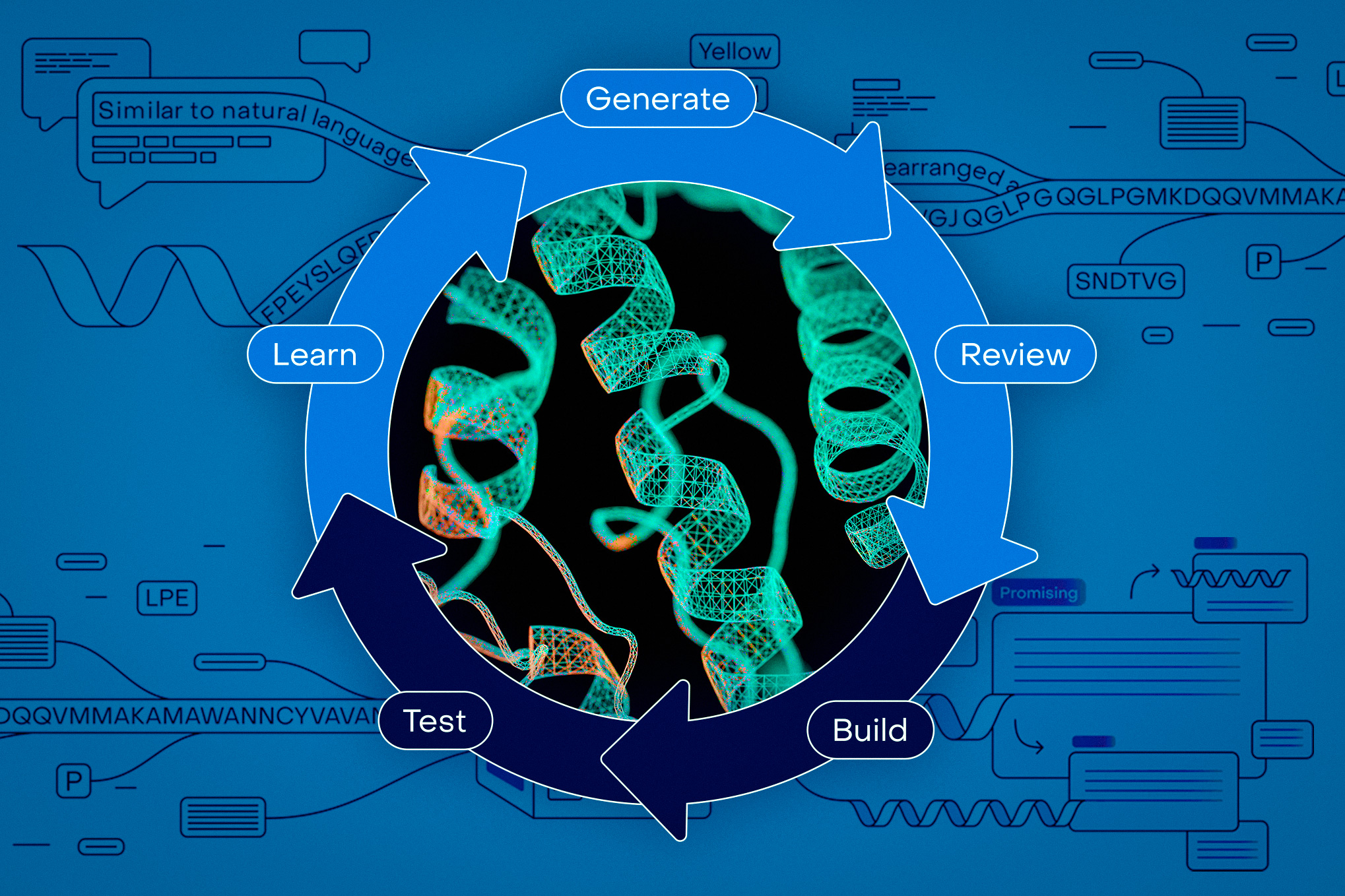
Artificial intelligence is rapidly transforming drug development and our understanding of disease, yet the most powerful models often remain inaccessible to researchers who lack specialized machine-learning expertise. OpenProtein.AI is bridging this gap with a no-code platform designed to put cutting-edge protein engineering tools directly into the hands of biologists. Founded by MIT alumni Tristan Bepler PhD ’20 and former MIT professor Tim Lu PhD ’07, the company provides an intuitive interface that allows scientists to design proteins, predict their structure and function, and train models without needing to write code.
Democratizing Protein Engineering
The platform serves as an open-ended toolbox for researchers in both academia and the private sector. By offering a no-code front-end, OpenProtein.AI removes the technical barriers—such as managing GPUs, fine-tuning, and complex library design—that previously hindered biologists from utilizing machine learning. While the platform is accessible to non-coders, it also provides APIs for researchers who prefer to integrate the tools into their own custom workflows.
Central to the platform is PoET, or Protein Evolutionary Transformer, the company’s flagship protein language model. Trained on protein groups, PoET allows researchers to incorporate their own experimental data to optimize sequences and analyze protein properties. This approach enables scientists to generate and validate protein libraries in silico, significantly accelerating the development cycles for therapeutics and industrial applications.
Scaling Innovation in Biology
OpenProtein.AI is already seeing widespread adoption, including an expanded collaboration with the pharmaceutical company Boehringer Ingelheim, which began using the platform in early 2025. As the company grows, it continues to refine its technology, recently releasing PoET-2. This updated model outperforms larger predecessors while requiring significantly fewer computing resources and less experimental data.
Looking ahead, the founders aim to expand the platform’s capabilities to address more complex biological challenges, such as designing proteins with dynamic features or those capable of engaging multiple biological mechanisms simultaneously. By fostering an open ecosystem, the team hopes to prevent the concentration of AI resources and ensure that researchers across the field have the tools necessary to drive scientific progress.
"It’s really important to create open ecosystems around AI and biology," says Lu. "There’s a risk that AI resources could get so concentrated that the average researcher can’t use them. Open access is super important for the scientific field to make progress."
Source: Read the original article on MIT News.