
AI air traffic tool being tested at DC-area airports
The U.S. Department of Transportation is testing an artificial intelligence system at three airports serving the Washington region, with the goal of helping air traffic managers respond to delays, weather and congestion. Reagan National Airport, Dulles International Airport and Baltimore/Washington International Thurgood Marshall Airport are the first airports to use the system, called SMART.
SMART stands for Strategic Management of Airspace Routes and Trajectories. Transportation officials say it will analyze real-time information and suggest ways to manage flight paths and airport capacity. The system will be studied in the D.C. area before a planned national rollout by 2028. as reported by Nbcwashington The test is also drawing concerns from air traffic controllers and lawmakers who say the technology must not replace professional judgment—or be introduced before workers and the public understand how it will be used.
What the SMART system is designed to do
Transportation Secretary Sean Duffy described SMART as a predictive tool that can combine information such as weather, airport congestion and flight paths. Its recommendations could help officials adjust routes and better align arriving and departing flights with available airport capacity.
“It gives us better information, better data to manage the airspace on behalf of the American people,” Duffy said.
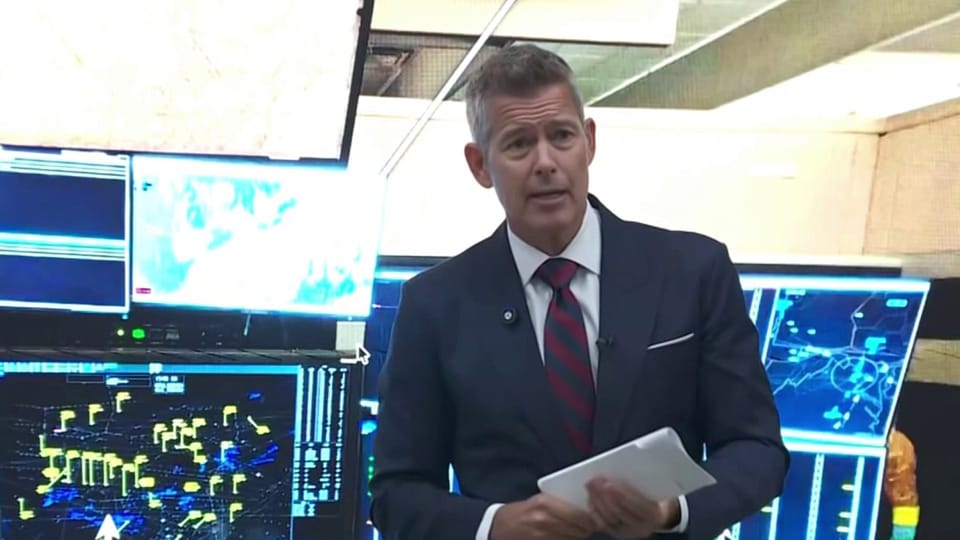
The system is intended to provide a prompt to a human airspace manager, rather than independently control aircraft. Duffy emphasized that distinction while demonstrating the technology at the Department of Transportation.
“I want to be really clear, there's been a lot of conversation about AI and who is controlling the airspace,” he said. “This is a predictive tool that will give a prompt to a human, to someone who is managing the airspace, but it's always going to be a human that manages the airspace in America.” The ai models story also surfaces in AI system rapidly aligns surgical X-rays..., adding another angle.
Officials presented the system as a way to address inefficiencies in a complex network, including at Reagan National Airport, which is highly constrained and slot-controlled. FAA Administrator Bryan Bedford said the airport may still have capacity that is not being used efficiently.
“You know, we think of Reagan as a highly constrained, slot controlled — there's no more room at Reagan,” Bedford said. “That's actually not true. We've got significant inefficiencies here where we can better align capacity to demand.”
The source material does not specify how many flights will be included in the test, how often controllers will receive recommendations or what performance measures will determine whether the system succeeds.
Why the Washington airports are the test site
DCA, IAD and BWI will be the first airports to use SMART. Duffy said the tool has not been deployed anywhere else in the world.
The three airports will therefore serve as the initial setting for studying how the technology works in the airspace around Washington. The transportation department says the eventual plan is to expand the system nationally by 2028.
The system comes from an $875 million contract awarded to a Boston-based software company. The source material does not identify the company or provide details about the contract’s duration, but it places the project within a broader effort to use artificial intelligence to improve the experience of air travel.
Duffy framed the effort as a response to widespread frustration with delays. For a practical look at image generation, AIturnitinchecker.com is a useful comparison.
“This is what America has asked for,” he said. “They said, ‘Hey, I'm sick of the experience that I have right now in America. I'm sick of the delays.’”
The planned rollout makes the initial test especially significant. Decisions made at the three Washington-area airports could influence whether SMART is expanded to other parts of the national airspace system.
Controllers and lawmakers raise safety questions
The National Air Traffic Controllers Association said new technology should support—not displace—the people responsible for managing the nation’s airspace.
“NATCA believes any new technology should complement and not replace the experience, training, and professional judgment of air traffic controllers who are responsible for the safety of the National Airspace System,” the union said in a statement.
That position aligns with the administration’s description of SMART as a tool that offers recommendations to human managers. But it leaves important implementation questions about how controllers will evaluate the system’s prompts and how much weight those recommendations will receive during busy or changing conditions.
Virginia Rep. Don Beyer, who represents the district that includes Reagan National Airport and co-chairs the bipartisan Congressional Artificial Intelligence Caucus, called for the test to be suspended. For a practical look at image generation, Audio Transcription is a useful comparison.
“The FAA should not use my constituents as guinea pigs for an unproven AI air traffic control system,” Beyer said. “The safety of the 24 million people traveling through DCA each year must be the top priority.”
Beyer also pointed to public concerns about air safety following last year’s fatal accident. He said the administration had done too little to educate travelers about the new system before implementing it in one of the country’s most complex airspaces.
According to Beyer, he was informed that air traffic controllers were not consulted during the system’s design and development and had not been trained to use it before implementation at the airports.
What happens next
The immediate focus will be the D.C.-area study of SMART at Reagan National, Dulles International and BWI. Officials will assess the technology as it processes the real-time conditions that shape air traffic, including weather, congestion and flight paths.
The central promise is that better information could help humans identify more efficient routes and better match airport capacity with demand. The central limitation, acknowledged by the transportation department, is that the system is not described as an autonomous controller. Its role is to make predictions and provide prompts while humans continue to manage the airspace.
The test’s credibility will depend on whether controllers are properly involved and trained, whether travelers receive clear information, and whether the system can improve delays without compromising safety. Those questions will remain central as the department considers its plan to bring SMART to airports nationwide by 2028.