
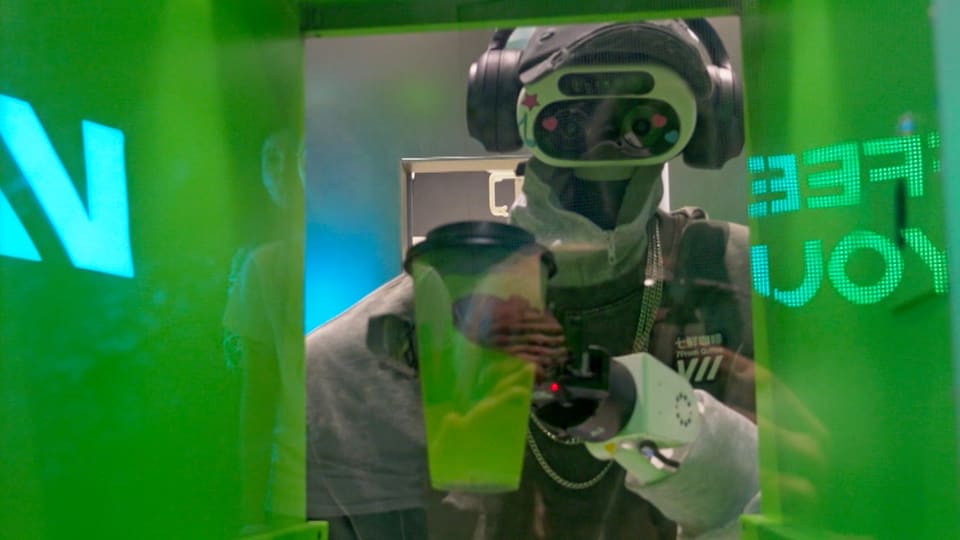
In China, drinks come with AI tokens and coffee is served by robots
A new coffee shop in Beijing is putting artificial intelligence and robotics directly in front of customers. At 7Fresh Coffee, drinks are made by machines rather than human baristas, and the venue has no cash registers. The development offers a visible example of how advanced technology is becoming part of everyday life for Chinese white-collar workers. as reported by Nbcnews The shift is unfolding as the United States and China compete for global leadership in advanced technologies. In Beijing, that competition is not confined to laboratories or corporate strategy: it is appearing in the routine act of ordering a coffee.
A coffee shop built around machines
The venue’s defining feature is its lack of traditional staff and payment counters. According to the report, customers encounter machines instead of human baristas, while a robot barista prepares drinks at 7Fresh Coffee.
The article’s title also points to another part of the experience: drinks come with “AI tokens.” The available material does not specify how those tokens work or whether they are used for ordering, payment or another function. What is clear is that artificial intelligence is being presented as part of the product and service itself, not merely as software operating behind the scenes. The ai industry story also surfaces in MLB Restricts Dugout iPad Use to..., adding another angle.
That makes the shop notable beyond coffee. A familiar retail setting is being redesigned around automated preparation and AI-linked transactions, giving customers a direct experience of technologies that are often discussed in abstract terms.
From technology race to daily routine
The Beijing coffee shop reflects a broader point in the report: the U.S.-China technology rivalry is quickly becoming visible in ordinary working life in China. Artificial intelligence is not described only as a research field or an industrial tool. It is also becoming part of how people buy and receive everyday goods.
The example is especially easy to understand because coffee shops are built around repeated, familiar actions: entering a venue, placing an order and receiving a drink. Replacing those steps with machines makes the role of AI and robotics immediately apparent, even without requiring customers to understand the systems behind them. The same robotics question is explored in WikiSkill, which adds a research perspective.
The report identifies the venue as the “buzziest new place for coffee in the Chinese capital,” suggesting that the machine-run format has attracted attention in Beijing. It does not provide customer figures, pricing information or details about how the shop compares with conventional coffee businesses.
What remains unknown
The available account establishes the shop’s unusual operating model but leaves important questions unanswered. It does not explain how many robots are involved, how orders are placed, what kinds of drinks the machines can make or how employees support the operation.
It also does not say whether robot-served coffee is intended to become a widespread model or remains a high-profile demonstration of China’s technology ambitions. For now, 7Fresh Coffee provides a concrete snapshot of AI and robotics entering a public, everyday setting—one cup at a time. as reported by Nbcnews