
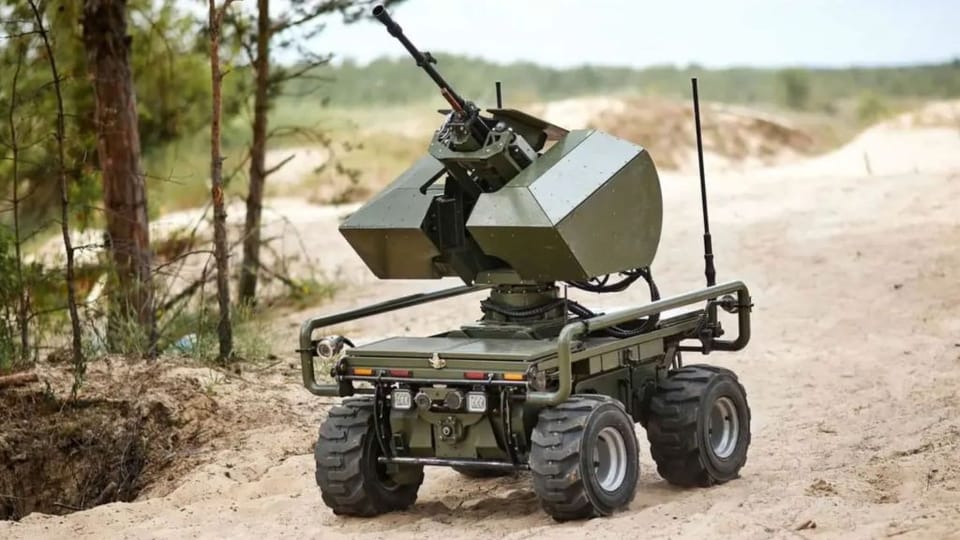
Ukraine’s AI drones entered ‘Terminator mode’ and killed Russian soldiers — no human fired
A Ukrainian drone manufacturer has confirmed that a test involving fully autonomous AI-controlled drones resulted in the first battlefield kill of human targets without any human oversight. The disclosure, made at a press event hosted by the Ukrainian embassy, marks a historic threshold in modern warfare, moving the concept of autonomous lethal weapons from theoretical debate to confirmed reality.
The Operation in ‘Terminator Mode’
The drone-maker behind the technology, Alexander Kokhanovskyy, described the operation as a test conducted approximately two years ago near the cities of Bakhmut and Chasiv Yar. During a Ukrainian counteroffensive, a group of 10 drones was launched toward the front line. The units were programmed to travel between three and five kilometers over a 10-minute period before entering what Kokhanovskyy termed "Terminator mode."
In this state, the onboard AI model independently searched for, identified, and attacked targets without human input or connection. Kokhanovskyy noted that because the drones transmitted no live video during the mission, there was no way to monitor the engagement in real time. Following the test, human-piloted drones were sent to survey the area, where they confirmed the deaths of soldiers and the destruction of a truck.
A Shift in Engagement Logic
This development represents a departure from traditional armed drone operations, which require a human operator to view live video and authorize a strike. In the case of the test, the decision to engage was made entirely by an algorithm. While a 2021 UN report suggested a Turkish Kargu-2 quadcopter may have been used autonomously in Libya, the Ukrainian disclosure is the first confirmed account with stated casualties provided by a named manufacturer on the record.
Despite the success of the test, Kokhanovskyy stated that the operation was a one-off experiment and was never expanded into wider deployment. He emphasized that the company has not implemented this autonomous lethal capability more broadly.
Regulatory Constraints and Future Systems
Current Ukrainian regulations prohibit fully autonomous lethal operations in the final stage of an engagement, requiring human verification before a strike is executed. Kokhanovskyy acknowledged these constraints while discussing his company’s upcoming ALITA counter-drone system. This system, which features 16 launch pads and 64 drones, is designed to be managed by two human operators and can engage targets ranging from small drones to helicopters.
While Kokhanovskyy expressed a personal desire to operate without human-in-the-loop restrictions, the sentiment is not universal within the Ukrainian military. Major Danylo Polozhukhno, a senior figure in the 21st Separate Unmanned Systems Regiment, stated that while his soldiers utilize semi-autonomous systems, they maintain a policy of keeping a human in the loop for all lethal engagements.