
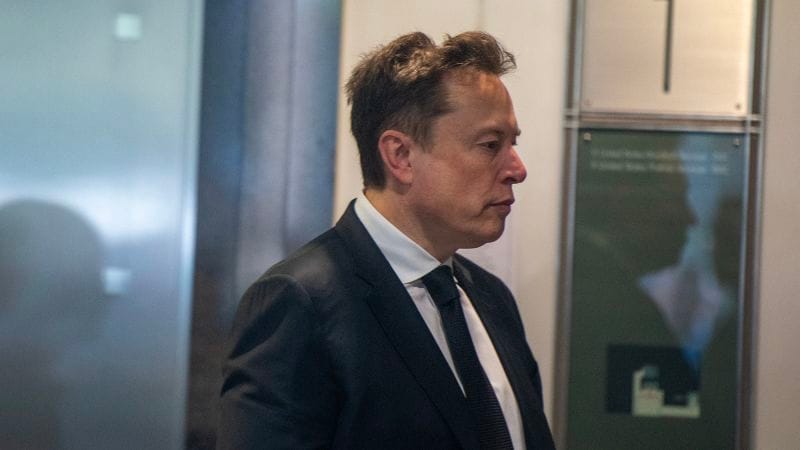
Elon Musk took the stand in an Oakland, California, federal courtroom on April 28, 2026, marking the beginning of a high-stakes trial that pits the billionaire against OpenAI, the company he helped co-found. Musk, who is seeking $130 billion in damages, alleges that CEO Sam Altman and president Greg Brockman betrayed the organization’s original nonprofit mission and deceived him in the process.
A Battle Over AI’s Future
During his testimony, Musk framed the lawsuit as a fight for the future of humanity, warning that artificial intelligence could lead to "dire consequences" if not developed safely. Musk, who now leads his own AI firm, xAI, argued that he initially invested at least $44 million to establish a nonprofit dedicated to "open" and "safe" systems. He explicitly stated that his goal is to prevent a "Terminator" outcome, asserting that the current trajectory of OpenAI threatens the safety of civilization.
The legal action seeks to force OpenAI to return to a nonprofit structure and remove Altman and Brockman from the board. Judge Yvonne Gonzalez Rogers will ultimately decide on these remedies, guided by the jury’s verdict.
Allegations of Deception and Betrayal
Musk’s legal team, led by attorney Steven Molo, contends that OpenAI, its executives, and investor Microsoft breached the fundamental principles of the charity. According to the lawsuit, the company’s shift toward a for-profit public benefit corporation allowed its leaders to wrongfully profit from charitable contributions. Molo argued that the deal with Microsoft fundamentally changed the company’s operation, moving it away from the "good of humanity as a whole."
OpenAI has vehemently denied these claims, characterizing the lawsuit as a product of jealousy and regret. Lead attorney Bill Savitt argued that Musk is attacking the company simply because he is now a competitor. According to OpenAI, Musk left the organization in 2018 only after failing to secure total control of the company. Savitt stated, "We’re here because Mr. Musk didn’t get his way at OpenAI. My clients had the nerve to go on and succeed without him."
Tensions Inside and Outside the Courtroom
The trial has been marked by significant friction, including a stern warning from Judge Rogers regarding Musk’s social media activity. Before the jury arrived, the judge scolded Musk for posts on his platform, X, where he referred to Altman and others as having "stolen a charity." Both Musk and the OpenAI executives have since agreed to limit their public commentary on the case.
The proceedings are expected to rely on hundreds of pages of internal communications, including emails and text logs, to provide a clearer picture of the power struggle that led to Musk’s departure. As OpenAI prepares for a potential public offering, the outcome of this trial could have massive implications for the future of the AI industry and the competitive standing of xAI.