
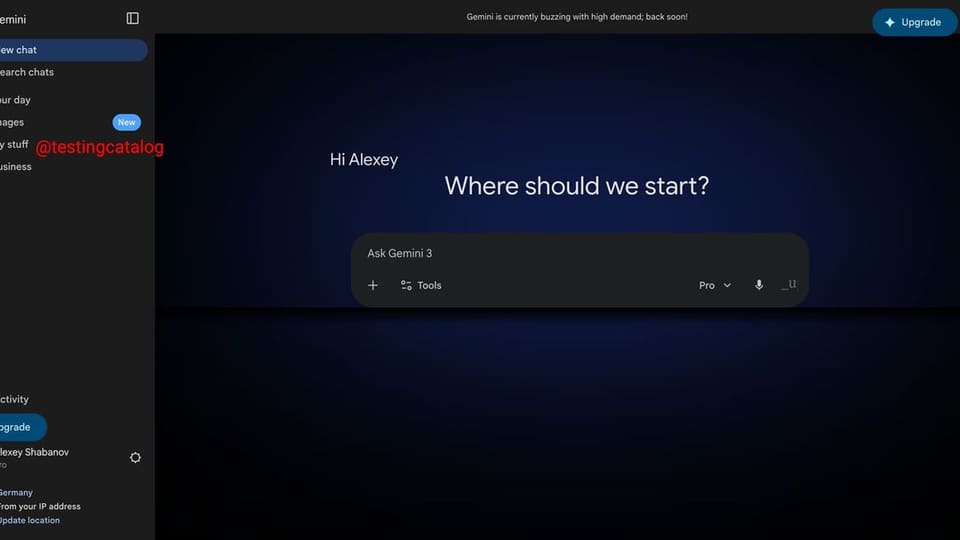
Google is preparing a significant shift in how consumers interact with the Gemini app, with new indicators suggesting the transition to a credit-based usage system. Recent builds of the application contain strings referencing usage limits, pointing toward a model where users receive a monthly allowance of credits to spend across various features and models, with the ability to purchase additional top-ups when their balance is exhausted.
Moving to a Flexible Consumption Model
The move toward a credit-based system would align Gemini with the consumption models already utilized by competitors such as OpenAI, Anthropic, and Notion. Currently, Gemini operates on a system of fixed prompt quotas and time-bound caps tied to specific subscription tiers. By adopting a credit-based approach, Google would provide power users with more predictable budgeting for intensive workloads, including long multimodal sessions, agentic tasks, and Deep Research or Deep Think features.
This transition also offers Google a more flexible way to introduce premium features. Rather than requiring users to bridge the significant price gap between the AI Pro tier at $19.99 and the AI Ultra tier at $249.99, a credit system allows for a more granular approach to service consumption.
Dedicated Image Tools and Interface Updates
Alongside the credit system, a new, dedicated images section has appeared in the web interface of the Gemini app. While the exact functionality remains unclear, the section is labeled as a new feature. It may serve as a distinct home for image generation, a platform for an updated model, or a comprehensive image editor integrated directly into the Gemini experience.
Such an editor could potentially pair Nano Banana 2 and Nano Banana Pro with canvas-style tools. This would represent a return of image-focused projects—previously explored through initiatives like Whisk and ImageFX—directly into the core Gemini product rather than keeping them within a standalone Labs surface.
Strategic Consolidation of Services
This development fits into a broader strategy of consolidation at Google. The company has already folded developer program perks into AI Pro and Ultra subscriptions and linked consumer subscriptions to AI Studio credits. With the Gemini API now offering prepaid billing for customers, Google is working to unify its billing infrastructure.
A shared credit pool covering the Gemini app, AI Studio, Antigravity, Flow, and a potential image editor would be a logical step as the company moves toward more compute-heavy workloads. These include tools like Jules, the Gemini CLI, and a rumored Gemini desktop app. These changes are expected to be discussed alongside other updates, such as the Stitch redesign, Jitro, and the broader Skills rollout, during Google I/O on May 19 and 20.