
NVIDIA’s November 2 Cosmos guide explains how developers can adapt world models to a physical-AI task and serve them through an application. It distinguishes model-development work in Cosmos Framework from deployment through Cosmos NIM microservices.
Development and serving solve different problems
Cosmos Framework provides training, optimization and inference tools. The guide describes adapting models to a project’s sensors, task and data, with options for fine-tuning, reinforcement learning and lower-precision inference.
Cosmos NIM microservices provide GPU-accelerated serving through APIs. Choosing a model-development recipe and choosing a serving configuration are therefore related decisions with different requirements.
The guide encourages developers to pin revisions, validate input data and evaluate against held-out examples. These checks matter when a visually convincing generated scene is being used to assess a perception or control system.
Interactive and offline generation
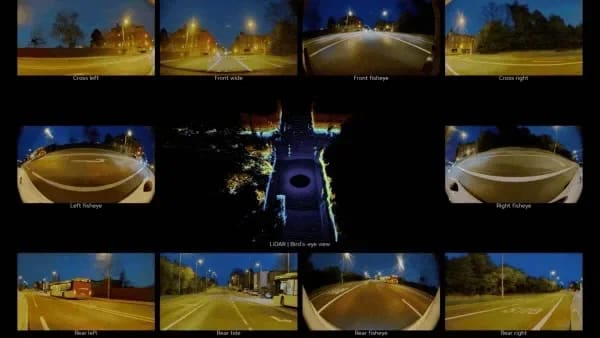
The autonomous-driving examples distinguish generating an entire clip for synthetic data from incrementally generating observations during a closed-loop rollout. The recipes can produce synchronized camera video and LiDAR observations from scenario controls.
NVIDIA also describes robotics and surgical-simulation examples. These are model-based simulation workflows; presenting a generated observation does not itself establish that a policy is safe in a physical environment.
What a developer should verify
The technical post includes setup, input and output checks for its reference configurations. It calls for checking alignment across camera views and LiDAR rather than accepting files merely because generation completed.
Before selecting a recipe, compare its GPU and memory requirements with the available hardware, and preserve the checkpoint and configuration used for evaluation. Test whether the generated observations remain consistent with the intended scenario controls.
The useful contribution is a documented path from a released checkpoint to a testable workflow. The guide is NVIDIA’s technical account of its platform, rather than an independent Franklin benchmark of simulation fidelity, inference speed or real-world policy performance.