
Translate an idea into a research workflow
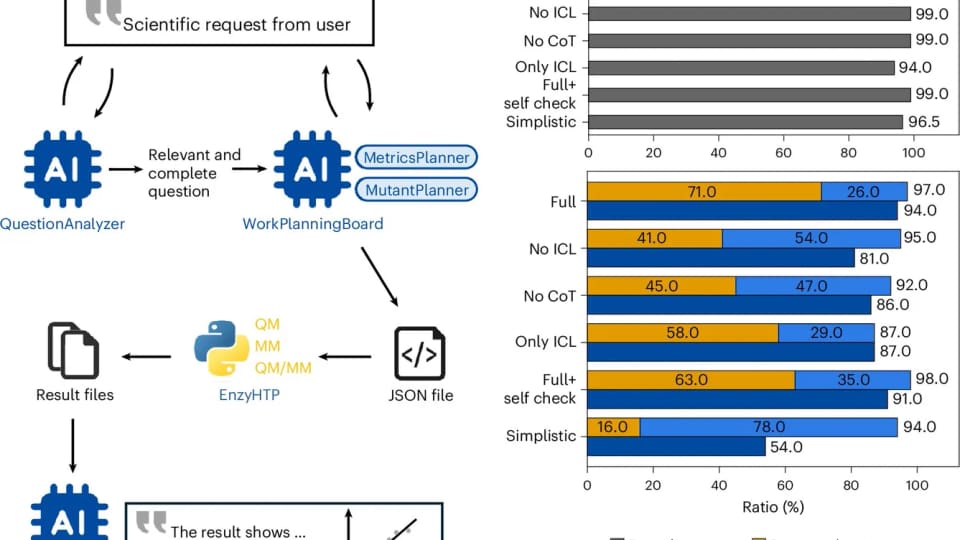
MutexaGPT is designed to help scientists turn an intuition about an enzyme into a computational design proposal. In a Vanderbilt University report carried by Phys.org, Zhongyue Yang and colleagues describe a system that accepts natural-language requests and connects them with chemistry and physics tools.
The report says language-model agents ask for missing information, build physics-based models and convert the results into actionable proposals. Its purpose is to help a researcher express and investigate an idea, rather than remove the researcher from the design process.
Why small molecular changes matter
Enzymes are proteins that accelerate chemical reactions. The report explains that changing even one amino acid can substantially alter how an enzyme functions, making the choice of mutations an important research problem.
The potential applications discussed include cold-active enzymes for food processing or detergents, and improved catalytic efficiency or selectivity in manufacturing. These examples explain why researchers care about the design task. They do not establish that the announced tool has already delivered a commercially deployed enzyme for each application.
A proposal still needs scientific checking
The work is published in Nature Computational Science. The announcement describes the interface and intended role of the system, while distinguishing a researcher’s intuition from the computational plan used to investigate it. A plausible plan is not the same artifact as an experimentally confirmed result.
For a scientist assessing the approach, the useful questions concern what information the agents request, which assumptions enter the physics model and how a proposed mutation is subsequently checked. Retain that chain from question to model to proposal when reviewing an output. The contribution is a way to make specialized research tools more accessible through conversation, not evidence that natural-language fluency by itself validates an enzyme design or a medical treatment.