
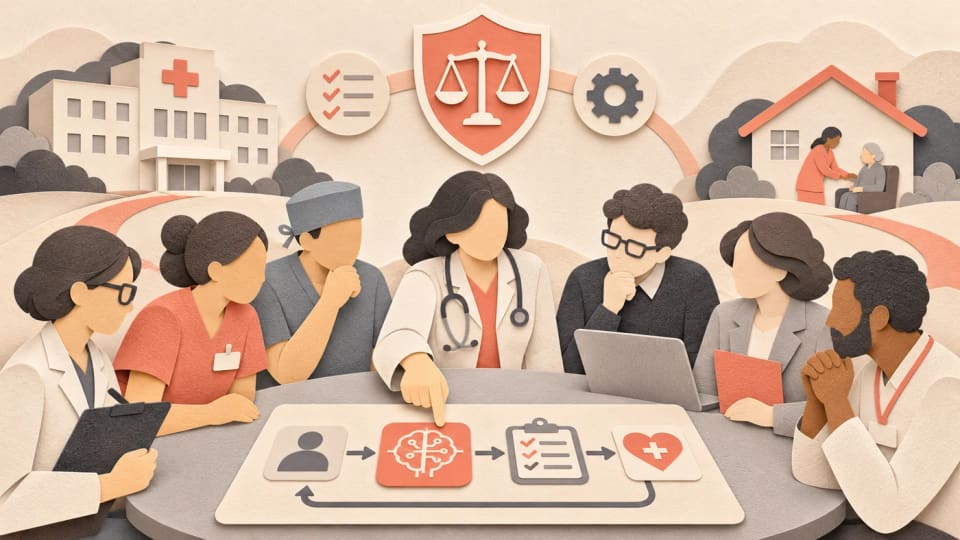
St Vincent's Health Australia has established an AI Clinical Council to guide adoption across its services, according to Healthcare IT News. The October 19 report describes an organisation-wide advisory body bringing together clinical and non-clinical expertise.
Who the council brings together
The council has 25 founding members drawn from services in Queensland, New South Wales and Victoria. Their disciplines include medicine, nursing, allied health, quality and safety, ethics, compliance, digital services and governance.
That range of expertise reflects the different questions a healthcare AI proposal can raise. A tool's technical performance is one part of a decision that can also affect clinical workflows, accountability and the experience of patients and care staff.
What it is intended to do
The report says the council will advise on identifying, evaluating and scaling AI technologies. Its first meeting identified priorities including responsible governance, ethical adoption, workforce engagement and meaningful value for patients, residents and staff.
St Vincent's says the council will not replace existing clinical, governance or approval processes. Its intended role is to help those decisions draw on frontline expertise and operational experience across the organisation.
What the announcement establishes
Creating an advisory council is a governance development. It is not evidence that a particular clinical AI system has improved outcomes, passed an independent evaluation or received approval for every use.
For other organisations considering a similar structure, the useful questions are how advice reaches decision-makers, which evidence a proposal must provide and who remains responsible after implementation. Those are evaluation questions, not a claim that one governance model suits every provider.
The local clinical setting also matters. Evidence from a tool's original test needs to be considered alongside how it will be used in an actual service. The report describes an effort to bring those perspectives together, with the effectiveness of the council and any resulting AI deployments requiring their own evidence over time.