
Stony Brook University researchers are developing tools to estimate machine-learning energy use in more detail. The university’s announcement, dated October 20, describes a two-year project supported by a $1 million award through DARPA’s Mapping Machine Learning to Physics programme.
Move beyond a broad estimate
The project addresses a practical limitation in existing energy predictions. A broad estimate can miss how parts of a model interact with optimisation techniques and the hardware executing them. That makes it harder to decide which model or device is appropriate for a specific energy budget.
The team plans to break a model into basic components and represent execution as a structured graph. This would capture individual energy contributions and how they combine into the model’s total consumption. The researchers aim to use that accounting to locate where energy is being spent.
Models and hardware belong in the same decision
The announcement links energy consumption to service operating costs and the battery limits of phones, sensors and autonomous systems. Tools developed through the project could help users compare models and optimisations for a task on a particular hardware platform, including resource-constrained devices such as drones.
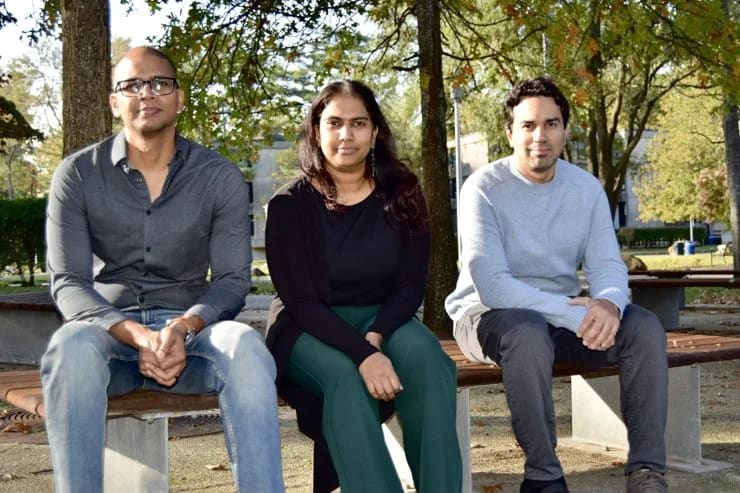
Aruna Balasubramanian leads the Stony Brook work, with Niranjan Balasubramanian and Anshul Gandhi as co-principal investigators. Xiaorui Wang at Ohio State University also participates as a principal investigator.
A research goal, with results still ahead
The team’s stated aim is greater energy efficiency while retaining the accuracy an application requires. The announcement describes planned tools and a funded research programme. It does not report a completed product, a measured percentage saving or a general guarantee that accuracy will remain unchanged.
For developers, the proposed value is a more explicit tradeoff: compare energy use and required predictive quality on the hardware that will actually run the model. The project’s eventual outputs will need evaluation against that practical question.