
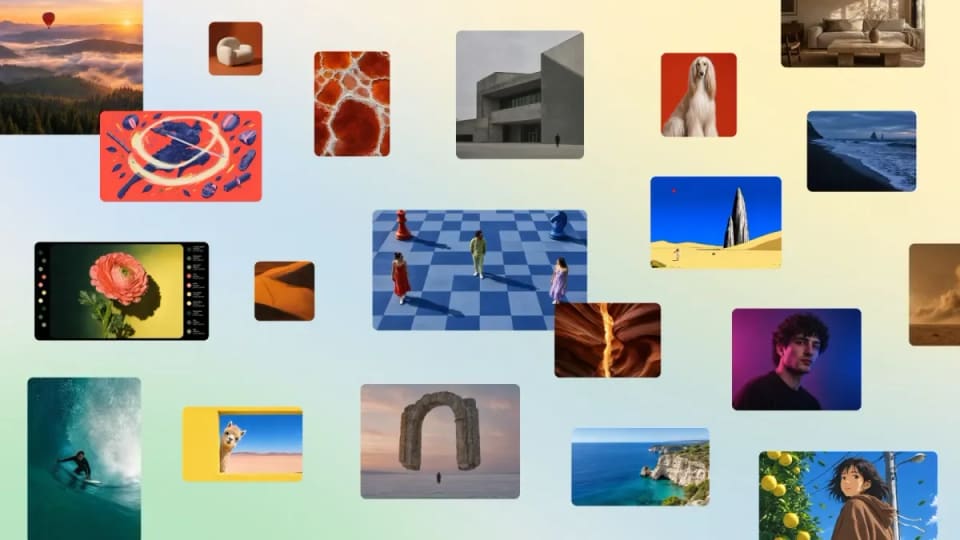
Canva has released its first image-generation model, Canva Craft. TechCrunch’s October 22 report describes a model trained around design layouts and a two-stage generation process. The practical focus is on structured visual material, including text-heavy designs, rather than only producing a finished picture with no editing context.
Plan the layout before rendering it
According to Ivan Mehta’s report, Canva says Craft first interprets a prompt and plans spatial relationships, relative scale, visual hierarchy and text. It then generates an image at up to 2K resolution across a possible 30 aspect ratios.
The company says this approach improves object detail, legible text and precise editing. Those are Canva’s capability claims; the report does not establish that every generated layout or piece of text will be correct.
Designs are central to the training account
Canva says it used human-designed templates from its library, including posters, presentations, social posts, menus and typography-rich layouts. The report connects Craft output with Canva Magic, an image-to-design transformer that can turn images into layered designs.
That connection is useful to evaluate separately from the initial image. A good-looking output may still require checking whether text, spacing and individual elements remain usable when converted into an editable layout. Franklin has not independently tested that conversion.
Available access and planned integrations differ
TechCrunch reports Craft access for users through the Dream Lab tab. It also describes API availability and plans for third-party chatbot access through Canva’s MCP integration. Canva’s faster model variants, Craftfast and Craft-ultrafast, are described as forthcoming.
A practical first test would use one real layout brief with exact wording and an intended output size, then inspect the generated text and the editable result. That keeps the evaluation grounded in the design task instead of treating resolution or aspect-ratio counts as evidence of overall quality.