
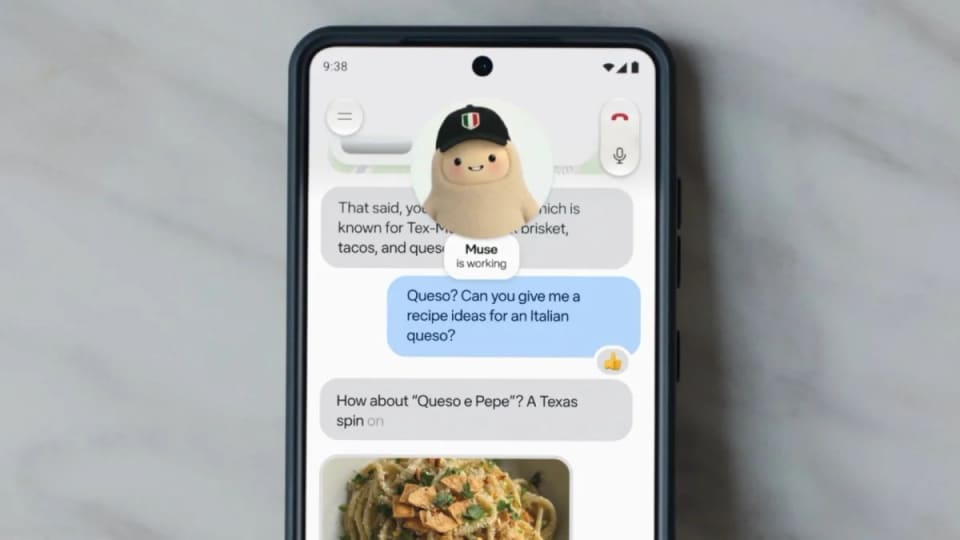
How the new conversation starts
Meta is rolling out voice conversations in the Muse app on mobile, the web and Mac. Its announcement directs users to the phone icon at the top right of a conversation to start speaking.
The feature follows a preview at Connect 2026. Meta presents it as a way to work through an idea aloud, rehearse a presentation or continue a discussion without composing a carefully written prompt first.
Voice and visual presence are separate choices
Muse can run as voice only, show an avatar beside the conversation or use a full-screen avatar view. Meta says the avatar changes its expressions and gestures with the conversation. Users can also choose among hundreds of voices and change the style.
The company describes an interruptible exchange using its Muse Realtime Avatar and Realtime Voice technology. Those are product capabilities claimed in the announcement. The page does not provide a comparative latency study or an independent measurement of how accurately expressions reflect a user’s meaning.
What is available and what remains forthcoming
The rollout begins in the US. Meta says voice conversations are coming to AI Glasses and Muse Charm, distinguishing those planned surfaces from the app availability being announced now.
Franklin’s analysis is that presentation should fit the task. Voice-only use may suit an informal rehearsal, while a visible avatar changes how much attention the conversation requires. Neither a responsive expression nor a natural voice establishes that the underlying answer is correct. A useful first trial is a familiar topic with a clear goal, so the user can judge whether speaking, interrupting and correcting the assistant improves the workflow.