
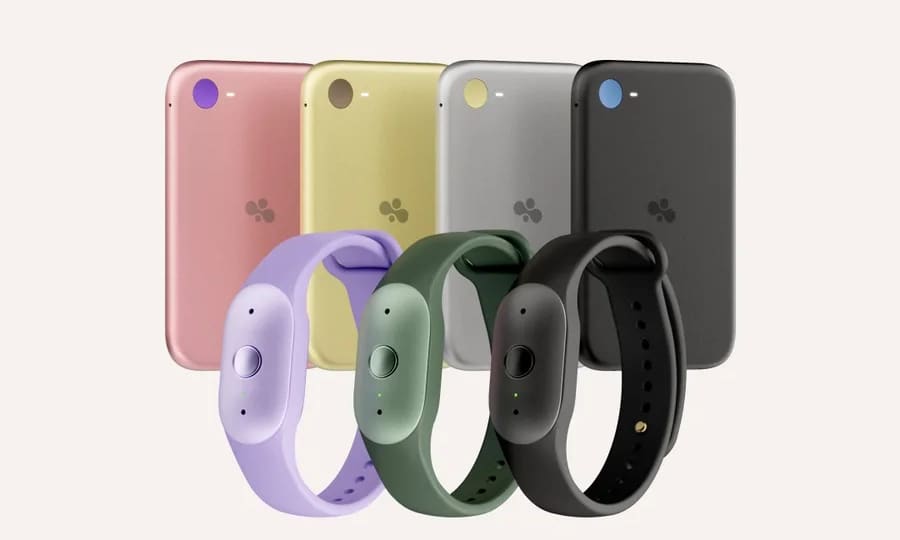
Two ways to carry Bee
Amazon's Bee is expanding its personal AI hardware with the Frontier and Eclipse, according to Sarah Perez's TechCrunch report. The $74.99 Frontier can be worn on a wrist or clipped on, while the $99.99 Eclipse is a credit-card-sized magnetic phone attachment.
At the time of the report, the Frontier was available on Amazon and the Eclipse was due to follow. That is a distinction worth keeping when comparing the devices: an announced product and a product already available to order are not the same stage of release.
What the service remembers
Bee devices turn conversations into summaries and recaps. The free service includes 14 days of memory. An $11.99 monthly Bee Pro subscription expands the service with unlimited summaries and integrations, including connections involving Amazon, Alexa+ and third-party services.
The purpose is to make details from conversations available later through recaps, tasks and questions. The ongoing service matters as much as the hardware price: buyers should decide whether the free memory window covers their intended use before assuming the purchase includes every feature indefinitely.
Understand the recording workflow
The report describes Bee's stated approach to handling audio: processing it in real time, deleting raw audio and keeping encrypted transcripts under device-controlled keys. These are the company's descriptions of its architecture, rather than a privacy guarantee established by Franklin's own testing. The report also describes transcript deletion and an optional Alexa Voice ID connection.
Franklin's reading is that the first useful trial is a simple conversation you can check yourself. Compare the summary and any resulting tasks with what was actually said, then inspect the deletion and integration settings. A device designed to remember conversations needs both accurate recall and controls its owner understands. Neither the launch announcement nor a polished recap alone demonstrates those qualities in every setting.