
An announced deployment with a future start
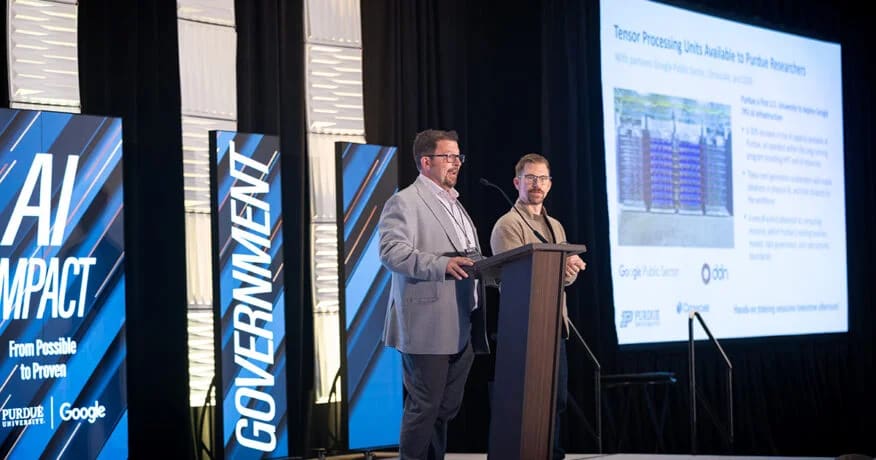
Purdue University is adding Google Tensor Processing Units to its campus research computing program, according to the university’s announcement. The collaboration includes Google Public Sector, Cirrascale and DDN.
Initial researchers are expected to begin using the system in January 2027, after integration in the expanded Mathematical Sciences Building Data Center. That timing matters: the October announcement does not mean the new system is already available to every faculty member or student.
Capacity within an existing research program
Purdue describes the addition as a 30% increase in its AI computing capacity. That is a capacity statement, not a measured increase in research output or a promise that every workload runs 30% faster.
The university plans to integrate the accelerators into its long-running community cluster program. It says researchers will gain access to the hardware while the institution maintains control over data, security and governance. The announcement connects the investment with training, inference and physical-AI research areas such as robotics and manufacturing.
Access and workload fit come next
Purdue calls itself the first U.S. academic institution to offer this custom hardware through its campus computing program. That is the university’s stated distinction; it should not be expanded into a claim that no U.S. researcher has previously used TPUs through another arrangement.
For a research group, the useful next information will concern access procedures, supported software and whether the system suits its actual model or experiment. The announcement establishes the partnership, intended capacity expansion and expected first-user date. It does not supply results from completed projects on the new installation. Teams considering it should keep the infrastructure opportunity separate from evidence that a particular experiment will improve.