
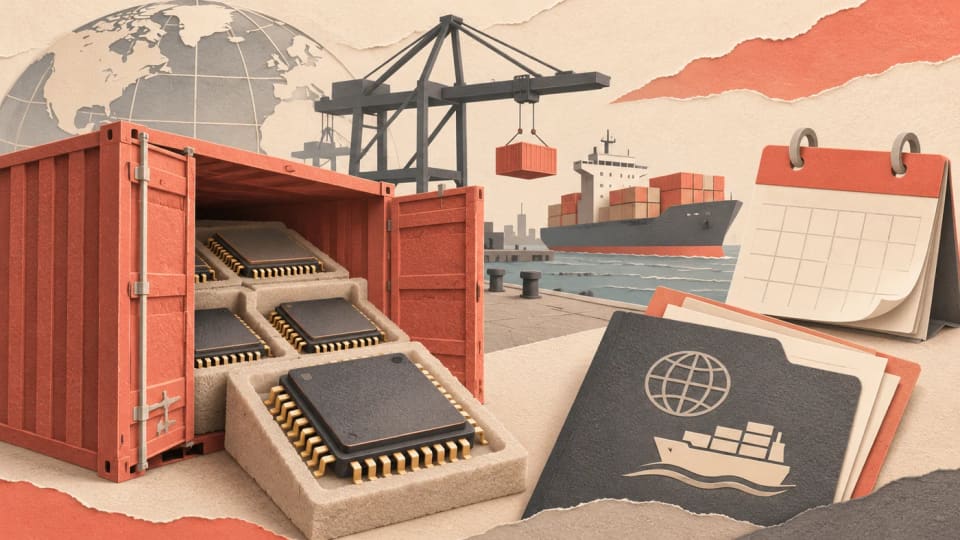
South Korea's trade ministry has reported October 2026 export results, with semiconductor demand a major contributor. The release was issued on November 1 and covers October. It does not describe a completed November trading period.
What the ministry reported
Total exports reached US$115.28 billion, up 93.7% from a year earlier. Semiconductor exports were US$56.44 billion, an increase of 259.4%. The release also reports stronger computer exports and discusses demand connected with AI-related infrastructure investment.
These are dollar values for goods exported during the reporting period. They should not be interpreted as an equivalent percentage increase in the number of physical chips shipped or as revenue earned by a single company.
Why AI appears in the explanation
The ministry connects semiconductor demand with continued capital spending by global technology companies. It also discusses server infrastructure and server-storage demand in its account of computer exports.
This provides an official view of the industrial trade pattern. It does not establish the return on those investments, the profitability of every AI service or a guarantee that supply will remain sufficient. The release itself discusses uncertainty in the wider trading environment.
How to interpret the change
Export values can reflect quantities, prices and product mix. A large annual percentage also needs to be read against the period being compared. Keep the reporting month and units visible when using the figures to understand AI hardware demand.
For readers following the supply chain, the useful next comparison is a subsequent release using the same categories and definitions. Avoid turning one strong month into an unsupported forecast or adding claims about future orders that the ministry has not documented. This report translates and summarises the official Korean release while preserving its actual October reporting period.