
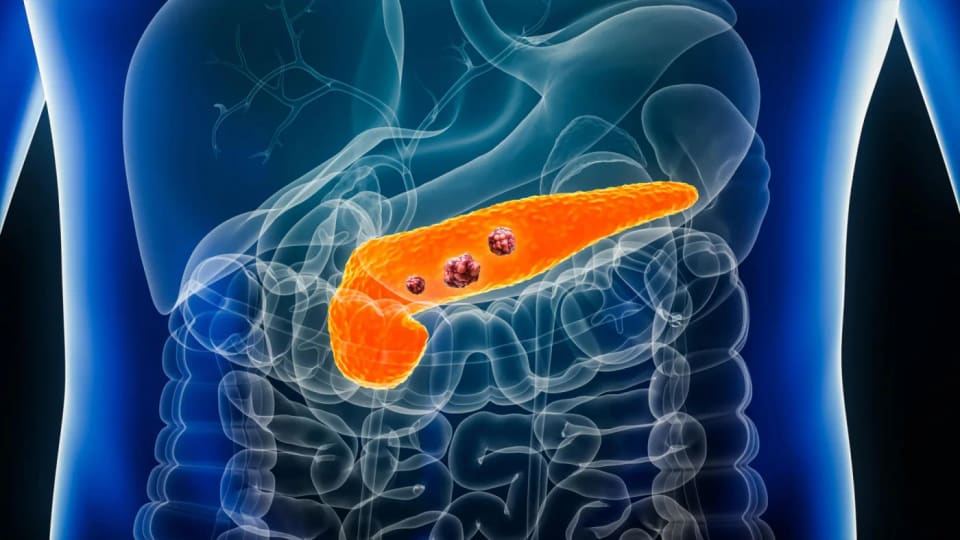
A study described in ScienceDaily’s BMJ Group report examines whether an AI system can detect pancreatic-cancer signals in CT scans taken before diagnosis. The system, REDMOD, identified imaging patterns an average of 475 days before clinical diagnosis in the reported retrospective evaluation.
What the researchers compared
The report describes scans from 219 patients whose images had initially shown no evidence of pancreatic cancer to experienced radiologists, but who were later diagnosed. Researchers compared them with scans from 1,243 people who remained free of pancreatic cancer for up to three years.
REDMOD analyses fine texture patterns and automatically outlines the pancreas. That segmentation step is intended to reduce reliance on manual tracing. The evaluation concerns previously collected scans; it does not show that offering the system prospectively improves patient outcomes.
Sensitivity is one part of performance
The reported sensitivity was 73% for REDMOD, compared with 39% for radiologists. For scans taken more than two years before diagnosis, the corresponding figures were 68% and 23%.
The report also describes separate cancer-free groups: REDMOD classified just over 81% of scans as cancer-free in a 539-patient group and 87.5% in an 80-patient NIH dataset. These results matter because an early-warning system must also be assessed for false alarms, rather than judged only by how many eventual cancers it identifies.
Clinical use remains an open question
The researchers call for prospective validation, including among higher-risk patients. They also identify limited ethnic diversity in the study population as a constraint on interpreting generalisability.
The findings support further investigation of subtle prediagnostic imaging signals. They do not establish an approved screening programme, demonstrate improved survival or replace a clinician’s assessment. The next practical evidence would come from testing how the system performs when used prospectively, including the consequences of additional examinations triggered by its warnings.