
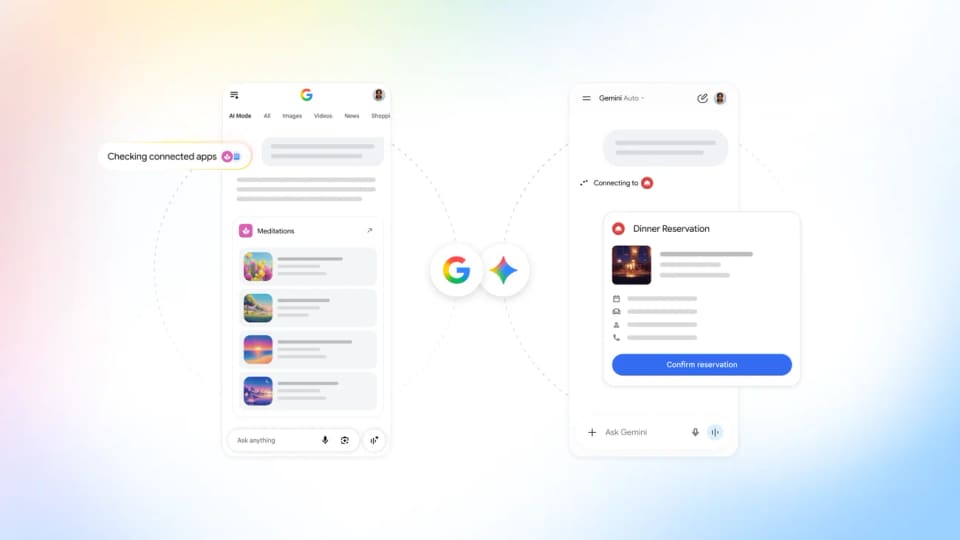
One integration, two destinations
Google has launched a preview of its Connected Apps Platform, according to the developer announcement. The platform is intended to give developers a shared route for bringing an app’s capabilities into Search and the Gemini app.
Developers can integrate through a cloud-hosted MCP server or Android MCP using AppFunctions APIs. They then register, test and submit the app through the Google Connected Console. Before review, they choose Search, Gemini or both as the intended destination.
A console for more than registration
Once an integration is live, the announcement describes monitoring for traffic, latency and errors. Developers can also manage their brand presentation, including verified logos and authenticated accounts. These controls make the console relevant after initial submission, not simply a form for requesting inclusion.
Access is opening in phases, with more developers, markets and Google products planned over the following months. The preview announcement therefore does not establish immediate access for every developer or a guaranteed review outcome.
Partner availability has its own timeline
Google says it has launched more than 50 Connected Apps across Search and Gemini. It identifies integrations such as Adobe, Experian, Localiza and Peloton as live in Gemini, with Search availability planned in the coming weeks. Calm is also described as an upcoming integration across both surfaces.
For a developer evaluating the platform, the practical first step is to define one capability and the authentication it needs, then check the preview documentation and eligibility. A successful integration also needs useful behavior when a request cannot be completed, which makes the console’s latency and error monitoring important. The platform promises a shared development path; it does not remove the need to test the actual app behavior on each surface where it is offered.