
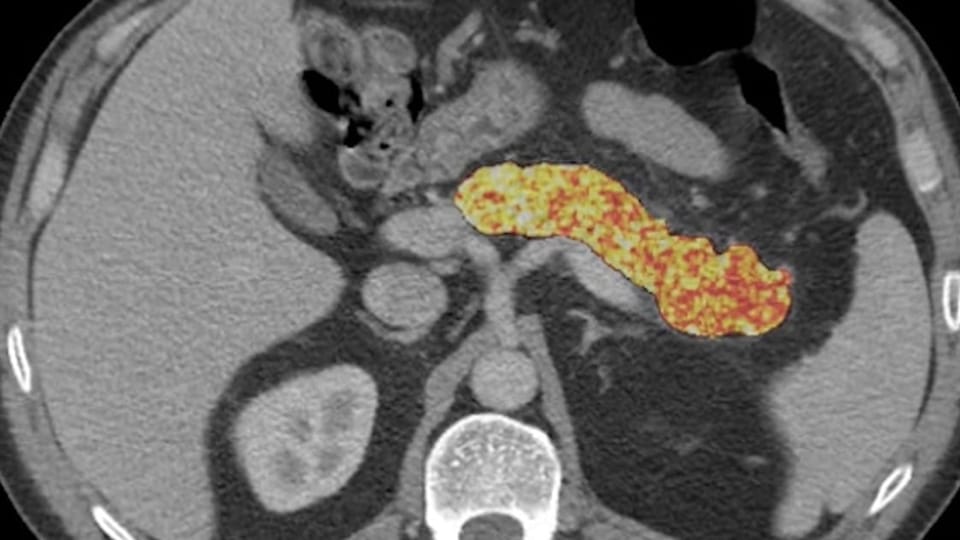
AI finds signs of pancreatic cancer before tumors develop
A new artificial intelligence model developed at the Mayo Clinic has demonstrated the ability to detect early signs of pancreatic cancer on CT scans up to three years before patients receive a formal diagnosis. By identifying subtle tissue changes that are often invisible to the human eye, the technology aims to address the significant challenge of late-stage detection in a disease that currently lacks routine screening protocols.
Detecting the Invisible
Pancreatic cancer is frequently diagnosed only after it has reached an advanced stage, contributing to a five-year survival rate of 13%. Because the pancreas is located deep within the abdomen, physical exams cannot detect early-stage tumors, and common symptoms like weight loss or pain typically do not emerge until the cancer has already spread.
The Mayo Clinic’s AI model was trained using CT scans from patients who were initially screened for other conditions but later diagnosed with pancreatic cancer. When researchers compared the model’s performance to that of radiologists, the AI was three times more effective at identifying early indicators of the disease. According to Dr. Ajit Goenka, a radiologist at the Mayo Clinic and an author of the study, the model identifies abnormal cells that protect cancer from the body’s immune system—a biological signature that has historically been difficult to visualize.
A Potential Clinical Game Changer
While the technology is currently being evaluated in a clinical trial, experts believe it could eventually serve as a vital tool for high-risk individuals, such as those with a family history of the disease or diabetes. By identifying these patients earlier, doctors could initiate follow-up imaging and blood work long before a measurable mass becomes apparent on a standard scan.
Dr. Pam Hodul, a surgical oncologist at Moffitt Cancer Center, noted that the model could be a "game changer" for early detection. By catching the disease before it invades blood vessels or spreads to other organs, the AI may increase the number of patients eligible for life-saving interventions such as surgery, radiation, or chemotherapy.
The Path to Implementation
Despite the promising results published in the journal Gut, the AI model is not yet ready for widespread clinical use. The ongoing clinical trial requires a follow-up period of three to five years to accurately track which participants develop the disease.
This research arrives alongside other emerging advancements in the field, including experimental drugs like daraxonrasib and mRNA vaccine trials. While these developments represent significant progress, researchers emphasize that the journey toward standardizing these tools remains ongoing. As Dr. Goenka noted, the model represents a milestone in a field that has struggled with early detection for decades, providing a clearer view of the path forward.