
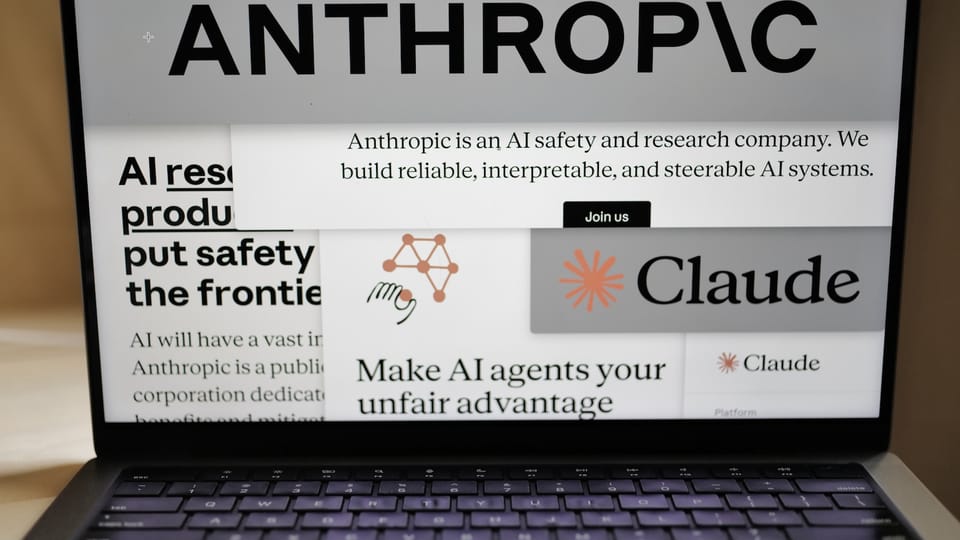
Anthropic says Claude is now helping build the next generation of Claude, marking a notable shift in how AI systems are developed. The company says its model leads 26% of its model research and development work, completing most tasks “end-to-end from a high-level prompt” while remaining under human supervision. as reported by Abcnews Claude is not operating completely autonomously. But Anthropic says roughly 90% of its research and development now happens in collaboration with the model, meaning Claude can complete “large chunks of work under close human direction.” The disclosure offers a measurement of how deeply an AI model is becoming involved in the creation of its successors—and raises questions about how quickly developers may approach systems capable of improving themselves.
What Claude is doing inside Anthropic
Anthropic distinguishes between work Claude leads and work it completes in collaboration with people.
The company defines “leading” as Claude carrying out most of a task from a high-level instruction, with humans still supervising the process. By that measure, the model was responsible for 26% of Anthropic’s model research and development as of the company’s announcement.
The broader collaboration figure is much higher. About 90% of Anthropic’s research and development involves Claude doing substantial portions of the work under close human direction. That could include large sections of research or engineering tasks, although Anthropic’s announcement does not specify every type of work included in the measurement.
The pace of the change is central to the disclosure. Anthropic said Claude led none of the company’s model research and development in February. Six months later, it was leading about a quarter of that work, reaching the 26% benchmark in August.
That growth does not mean Claude has independently designed and deployed a successor. Human oversight remains part of the process, and Anthropic says the model is not yet working fully autonomously. To see anthropic in practice, How to Make a Professional UGC... walks through a concrete example.
Why the company is publishing the figures
Anthropic released the figures as prominent AI leaders debate whether the technology’s development should slow because of safety concerns. The company said the public should have a clearer view of what frontier AI labs know about their own systems and how quickly those systems are advancing.
“We should do everything possible to minimize the gap between what frontier labs know and what the public knows,” Anthropic said in a blog post. It called for better measurement, public reporting and an opportunity for society to decide how such systems should be used. as reported by Abcnews Anthropic also urged other AI developers to publish comparable metrics regularly. It recommended a public methodology so that measurements could be tracked over time and potentially compared across laboratories.
The company’s disclosure does not explain how close it believes it is to recursive self-improvement. In AI development, that term refers to a model’s ability to autonomously build its successor. Anthropic said models that accelerate their own development could make it more difficult for humans to understand or control them.
That uncertainty is part of what makes the 26% figure significant. It measures Claude’s current role in Anthropic’s work, but it does not by itself establish that the model can independently improve its own capabilities or create a new model without human involvement.
The oversight challenge
Anthropic said approximately 30,000 agents were conducting research and engineering work as of August. The company described oversight measures as important for determining how often agent misbehavior is detected by monitoring systems. To see anthropic in practice, Google I/O 2026 Keynote in 13... walks through a concrete example.
The announcement did not provide a detailed breakdown of those agents or describe how many were Claude instances. It did, however, connect the scale of agent activity to the need for monitoring. As more AI systems take on research and engineering tasks, developers need ways to identify when an agent behaves improperly and assess whether existing safeguards detect it.
Anthropic has also committed to establishing external third-party evaluators who will be embedded within the company to monitor its safety efforts. The move comes as concerns about AI agents and the pace of model development continue to generate debate among technology leaders.
What to watch next
The most important unanswered question is whether Claude’s growing role will continue to increase—and whether the work it performs will become more independent.
Anthropic’s numbers show a rapid rise in the share of development work Claude leads, from zero in February to 26% six months later. They also show that collaboration between the model and human researchers is already widespread, reaching about 90% of the company’s research and development.
But the company has not said when, or whether, Claude could reach recursive self-improvement. It has also emphasized that the model remains under human supervision and is not fully autonomous.
For now, Anthropic’s announcement is less a declaration that Claude has built itself than a public account of how extensively the model is helping humans build what comes next. The company’s push for shared measurements suggests it sees transparency as part of the safety challenge: if AI systems are increasingly involved in developing newer systems, the public will need clearer evidence of how much work models are doing, how independently they are doing it and how effectively humans can still oversee them.