
Sequenzy
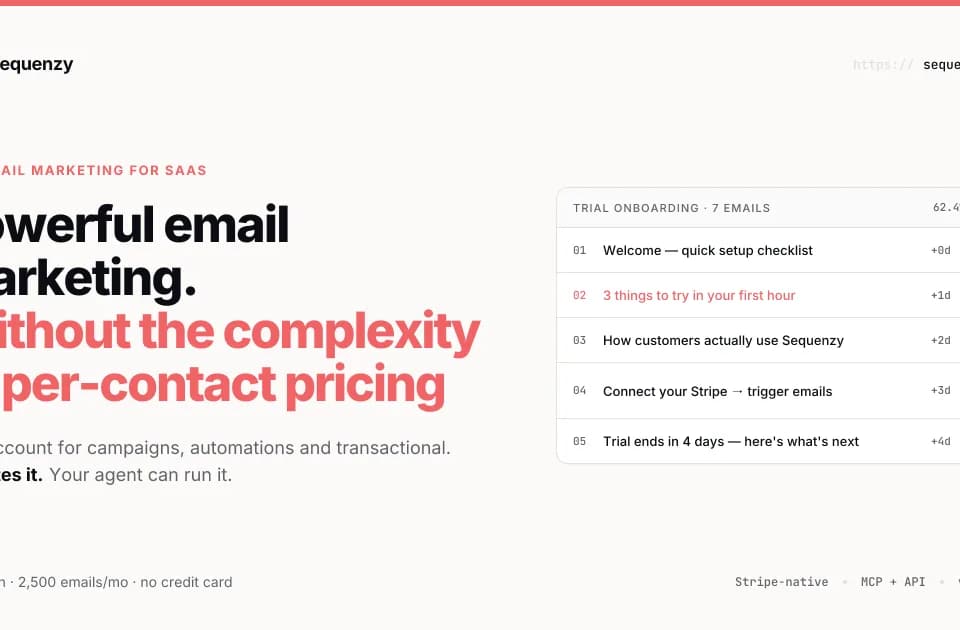
Sequenzy brings campaigns, automated sequences and transactional email into one account. Its official site describes shared contacts, templates and sending domains for marketing messages and operational mail such as receipts or password resets. AI can draft email content from a business website, while the editor keeps the resulting blocks editable.
Connect the event to the message
Automations can start from Stripe, PostHog or events posted from a backend. The examples include failed-payment follow-up, onboarding and a trial-ending reminder. Flows support branches, delays and conditions; segments can use plan, revenue and engagement data.
This is useful for a product team that wants email to respond to account activity. Before switching, map each event and sequence to the new service. Sequenzy's migration FAQ says integration code must use its endpoints and event formats, and the handling of customers already inside a flow needs to be agreed during migration.
Draft and review through the interface you use
Sequenzy offers a REST API, CLI and MCP access for AI assistants. The site says nothing sends until you approve it. Its agent workflow can build a segment, draft messages and prepare a page for publication.
The product also lists A/B testing, reply tracking and revenue attribution. Treat the homepage's example revenue and customer testimonials as publisher illustrations rather than an expected result. Review generated copy, recipients and timing before approving a real campaign.
Count all the email you send
Plans are based on sending volume and include unlimited contacts. Marketing, automated and transactional messages share the email allowance. The free plan is listed at 2,500 emails per month; growing the contact list alone does not change the plan.
The transactional-email page describes sending through an API and tracking delivery events with webhooks. For a production migration, verify domain authentication and event handling with your actual workflow. The vendor's delivery-speed and inbox-placement claims do not establish results for a particular sender or recipient list.