
Get Sheet Done
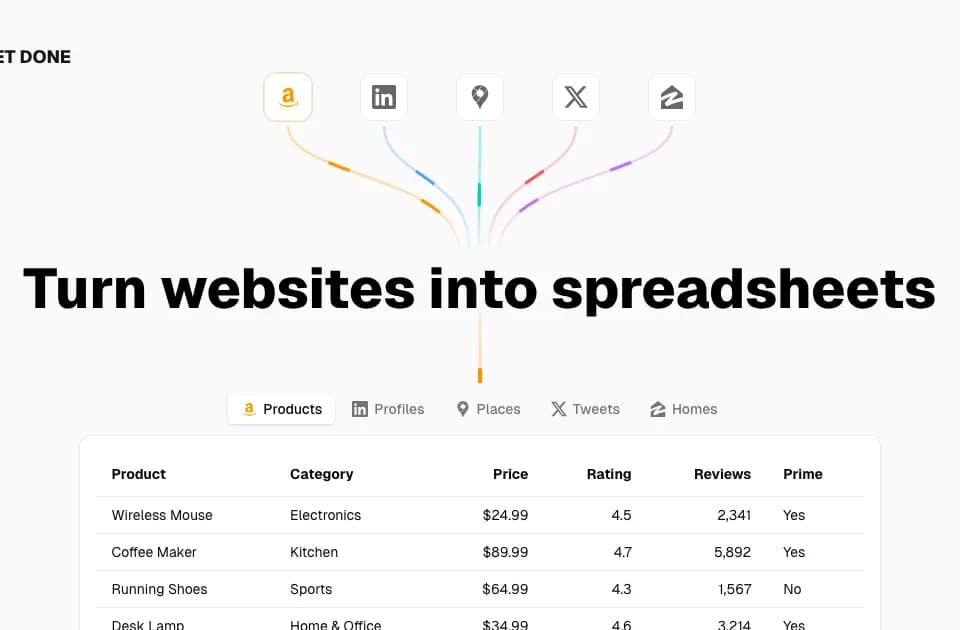
Get Sheet Done is a browser extension for extracting structured data from websites. Its official website promotes a short workflow for turning leads, listings, or other web content into a spreadsheet. It is in early access, and the roadmap makes clear that several broader automation features are still being built.
Detect and structure web data
The extension identifies field names and data types automatically. The publisher also describes automatic pagination and scrolling, plus formatting that structures messy values such as prices, dates, and booleans. These functions address the repetitive work between identifying a useful listing page and producing a usable sheet.
The homepage shows use cases for sales leads, real-estate research, marketing, competitor monitoring, and recruiting. Named examples include LinkedIn, Google Maps, Zillow, Amazon, and Indeed. They illustrate the intended audience; they do not establish that every page, account state, or website restriction is supported. Test the actual page and verify the extracted fields before using the resulting dataset.
Early-access scope
The website lists agents that browse and enrich data at 20% complete and scheduling at 50% complete. Detail-page extraction, bulk URL input, and integrations are each marked 0% complete. Those labels matter if your task involves following a listing into its detail page, importing a long URL list, or sending results into another application. The public roadmap does not support treating those workflows as finished capabilities.
The core extraction and formatting workflow is therefore the clearest reason to evaluate the extension. Choose a representative page, inspect the output structure, and check whether automatic scrolling captures the records you need.
Plans and credits
The site offers a free plan with 250 credits per month. Its early-access pricing cards advertise Explorer at $20 per month and Founder at $40 per month, with larger credit allowances and price-lock wording. They also list agents and schedules despite those features’ incomplete roadmap status, so confirm what is usable before subscribing.
The visible FAQ raises the question of how credits work but does not provide the answer in the public text. Do not equate a credit with one extracted row without checking the product’s actual accounting. That detail determines whether the allowance fits a small lookup or a repeated collection job.