
E-Commerce Store Audit
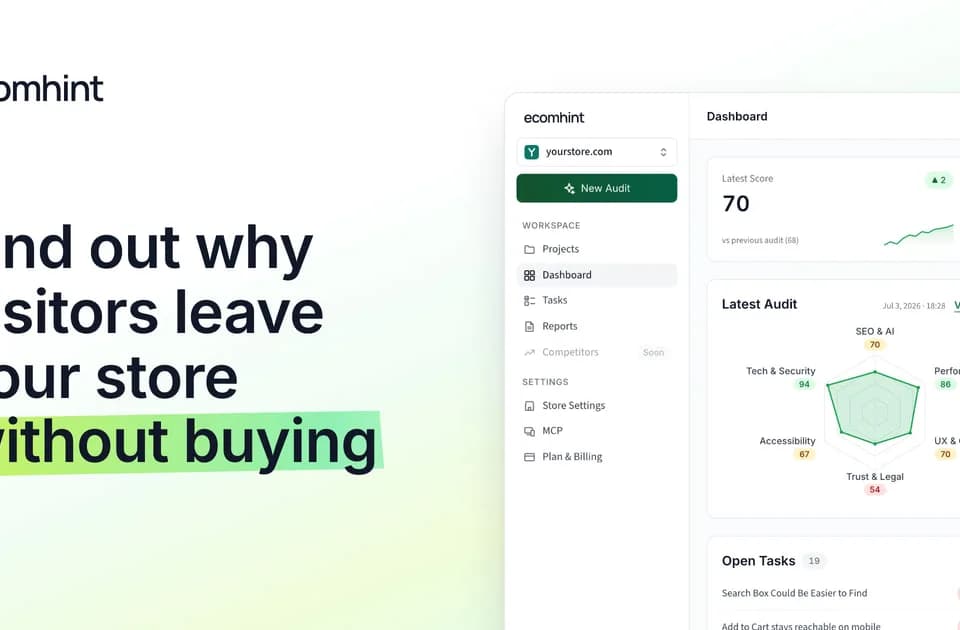
Ecomhint audits the shopping experience on an ecommerce storefront and provides findings with evidence and fix steps. The publisher supports Shopify, WooCommerce and Shoptet. Its checks cover search visibility, performance, conversion-related usability, trust, accessibility, and technical setup.
Inspect a finding before making a change
The audit starts from a store URL and follows public pages through to a product in the cart, on desktop and mobile. The feature description explains that findings can contain a page element, capture, measured data or observed behavior. Fix guidance is written for the detected platform.
Ecomhint prioritizes issues and highlights quick wins. Treat that ranking as a starting point for your team's work: inspect the underlying evidence, confirm the affected page and decide who should make the change. Some fixes belong in platform or theme settings; others may need a developer. A score gives you an overview of detected checks, rather than a guarantee of future sales.
Re-audit and track the work
Full Access turns findings into tasks and provides audit history. After a change is live, users mark the task done and run another audit. A later passing check moves the task to Verified; if it still fails, the task returns to To do. Each store has its own reports and work list.
The MCP documentation describes subscription access from compatible chat clients for reading findings, updating tasks and starting audits. Chat and web audits use the same credits. A connected client cannot mark a task Verified itself; that status requires a later audit.
Choose report access and audit capacity
The pricing page offers a free preview with three issues opened in full. A $19 one-time purchase unlocks one completed report, while Full Access costs $29 per month and includes ten audit credits per billing period, plus applicable tax.
Credits can be used across stores, but one audit runs at a time per account and unused credits reset at the next period. The publisher describes reading the storefront without installing software or accessing its admin or customer records. Password-protected stores are supported, although Google's page-speed and Core Web Vitals checks are skipped until the storefront is public.