
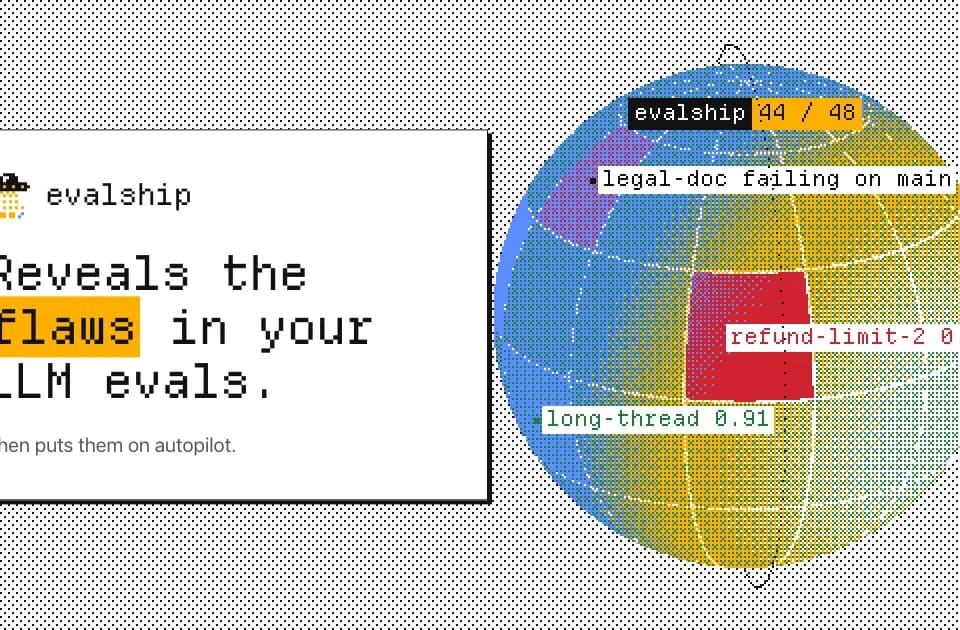
evalship reviews whether LLM evaluations catch the failures that matter
evalship is aimed at teams whose AI evaluations can pass while important behavior remains untested. The official site describes reviewing scorers, judges and prompts during setup, then monitoring pull requests for regressions and gaps in coverage.
Checking the tests themselves
The publisher's examples include a scorer that allows a privacy failure to be offset by other scores, a refund rule with no test and a judge error that incorrectly produces a passing result. These are demonstrations of the problems the service looks for, not findings about a reader's own repository.
This distinction is useful because an evaluation suite has its own failure modes. A green result means little if the relevant case never ran or a broken judge was counted as success.
Pull-request feedback
evalship describes reporting which cases changed, the likely prompt or code change behind them and whether the difference looks like a regression or noise. Its workflow can also flag a new AI call that no evaluation exercises.
The site shows merge-blocking checks, but a team's actual protection depends on its repository configuration and connected checks. Review those settings when deciding which failures should prevent a change from shipping.
Optimising prompts and models
The product also evaluates candidate prompt and model changes using repeated trials. Its examples distinguish a result that beats the current configuration from one where the observed gap remains within chance. A cheaper model should not be described as equally capable merely because a small sample found no clear difference.
A sensible starting point
Use one representative workflow and a known failure to evaluate the integration. Check whether the report explains the failure and whether a subsequent correction is recognised. The goal is useful feedback about AI behavior and the quality of its tests, rather than treating the service's demo scores as results for your own system.