
AgenticReview: assess repository history and how teams steer coding agents
AgenticReview analyzes repository history to report on software quality and how a team works with coding agents. Its website positions the service as a broader assessment across projects and time, rather than only a comment on one proposed change. That makes it most relevant to teams asking how their development practices are evolving.
Repository history supplies the signals
The AgenticReview website says the service reads git history independently of whether a team uses Claude Code, Codex, Cursor, Copilot or another listed tool. It describes conventional quality signals alongside guardrails, plans, review and handover around agent-generated work.
This is a claim about what the analysis examines, not proof that a score can identify every cause of a project’s strengths or weaknesses. Repository history records some aspects of collaboration while leaving other decisions and context outside the record.
Read the dimensions behind the total
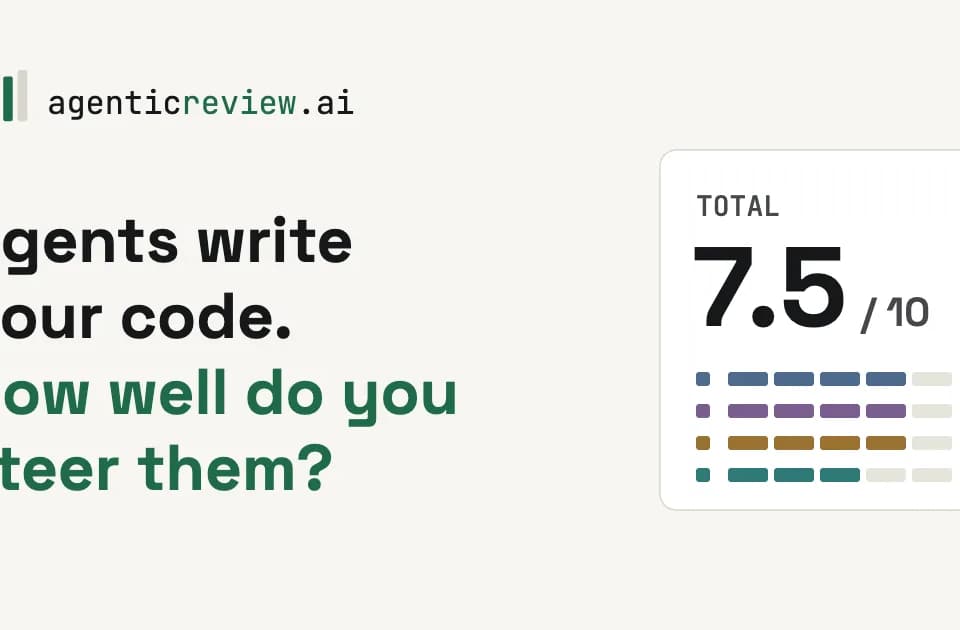
The sample report groups results into Capacity, Composable, Craftsmanship and Cooperation. It shows project and company views, changes over time and comparisons with other organizations. The visible sample score is an example report, not a measurement of a prospective customer’s codebase.
A useful review should connect a dimension to an understandable finding. Before using a score to set team priorities, inspect which signals produced it and whether those signals reflect the project’s actual constraints. A comparison can prompt investigation without establishing that every difference represents a defect.
Check the analysis boundary
AgenticReview says reviews run on GitHub’s runners with read-only access, analyze code in memory and retain derived metrics in the EU rather than source contents or commit messages. Those are vendor descriptions of the data flow and should be checked against the current setup and policies.
The site offers an initial free review with repository limits and paid options. A practical first use is one familiar project, followed by a discussion of the findings with the people maintaining it. This guide does not independently validate the scoring model or its market comparisons.