
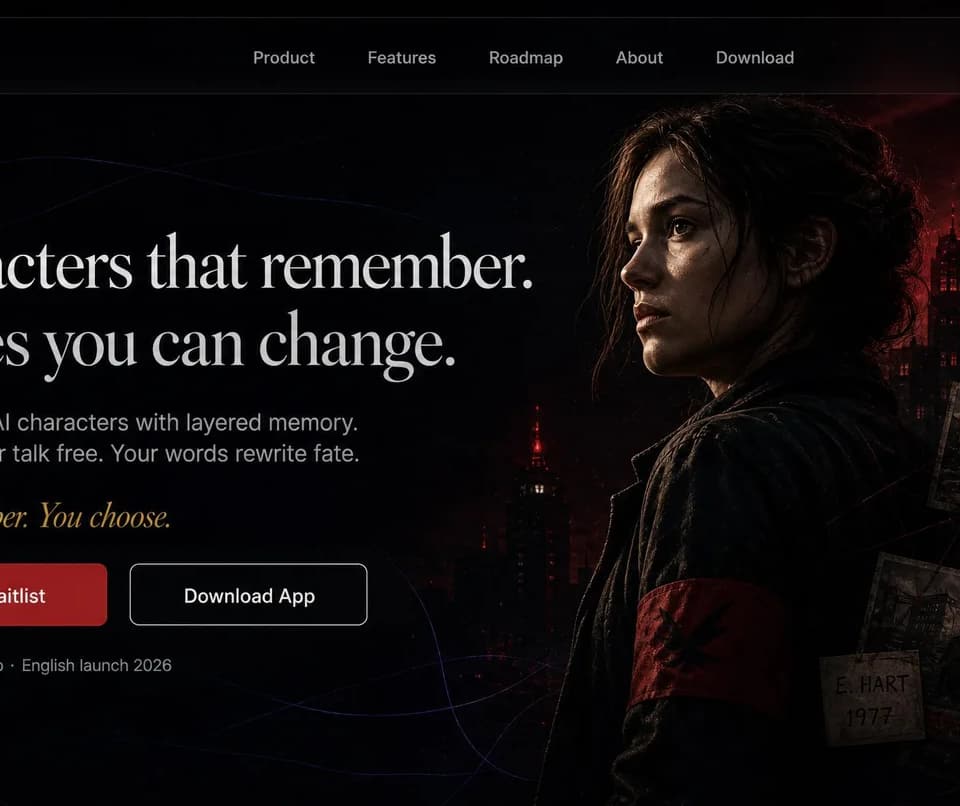
Soulthread.talk
Soulthread offers conversations with AI characters and a story mode in which the reader's choices influence the narrative. The publisher's homepage describes characters with layered memory and invites users either to enter a story or talk freely. The available material does not explain how long that memory persists or establish how well characters retain details across conversations.
Try the story and chat modes
Soulthread's free tier includes the Still Here: Red Long Night prologue. Full story chapters require its All Access subscription. That gives a new reader a defined piece of the story to try before paying for the rest, rather than assuming every advertised chapter belongs to the free tier.
Free Chat has separate allowances. The published pricing page lists about ten messages per day and 200 per month on the free plan, with selected official characters. It also describes creating agents as subject to plan permissions. Check the actual account permissions if making and publishing your own character is the main reason you want the service.
Compare the monthly subscriptions
Free Chat Monthly costs $9.99 per month on the published USD pricing page. It includes official Free Chat characters and voice-related features, with unlimited chat subject to the configured permissions. That subscription excludes full Story Mode chapters.
All Access Monthly is listed at $19.99 and includes full Story Mode alongside the chat plan's features. The pricing explanation says these are public seed defaults and that operations can adjust quotas and character lists. Confirm what checkout and your live account include, particularly for a specific character or chapter.
Check availability and renewal details
The homepage advertises mobile and web access, English at launch, and a browser app. It also shows an iOS beta invitation alongside a coming-soon notice, so the page alone does not establish a finished App Store release.
Soulthread offers monthly billing only on the retrieved pricing page. It describes cancellation through Profile, then VIP or Subscription, with access continuing to the end of the paid period. Cancelling renewal and deleting an account are different actions. Read the terms before purchasing if refund eligibility is important to you; the pricing text describes fees as non-refundable except where law or a specific offer requires otherwise.