
PromptGuard
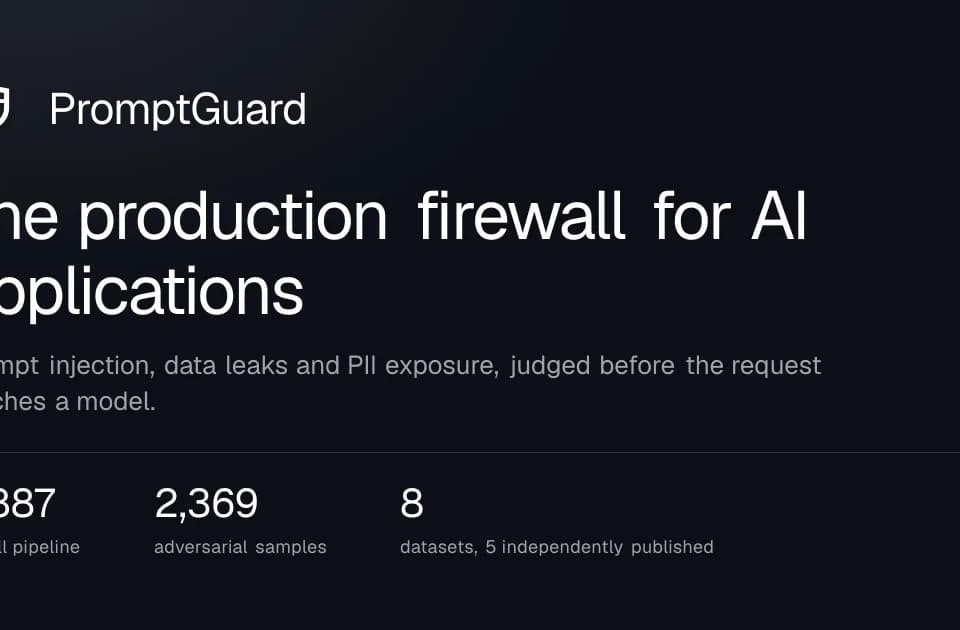
PromptGuard is a security gateway for applications that call language models. The publisher's overview describes inspection for prompt injection, jailbreaks, sensitive-data exposure and other threats before requests reach a model. It is intended for developers and security teams operating AI applications.
Put inspection in the request path
Integration options include SDK instrumentation, a proxy and the Guard API. Teams can configure detection rules, redaction and sensitivity, then monitor decisions through the dashboard. The engine can allow, redact or block traffic; its output should be incorporated into the application's handling of requests.
Deployment options include managed cloud, a gateway in the customer's infrastructure and an air-gapped installation. These are different data-handling arrangements. Choose one after checking which logs and metadata leave the network, how retention is configured, and which options the selected plan actually provides.
The same platform also describes Shadow AI for employee use of AI tools, through a browser extension and desktop agent. That is a separate use case from protecting an application you build. Fleet rollout and organization policy should be confirmed against the appropriate offer rather than inferred from gateway access.
Test policies against real application traffic
PromptGuard supports shadow-mode policy comparison and versioned policy changes. That gives a team a way to inspect which requests would move between outcomes before activating a change. The publisher also describes project-scoped API keys and key rotation.
The service allows configurable fail-open or fail-closed behavior when unavailable. Decide that behavior deliberately: one preserves traffic at the expense of inspection, while the other can interrupt legitimate requests. Verify the integration's behavior with benign requests, adversarial content and provider failures before relying on it in production.
Understand the boundaries
The feature documentation explicitly identifies incomplete coverage. It does not attest the provenance of models or dependencies, scan training pipelines, or provide vector-database access controls. Its context-grounding check is lexical, rather than embedding similarity.
The publisher's benchmarks also report missed attacks and false positives. No detector should be treated as complete protection. Keep ordinary access controls, tool permissions, monitoring and incident handling alongside the gateway. Review request allowances, retention and overage behavior on the pricing page; these can affect both availability and the cost of operating the integration.