
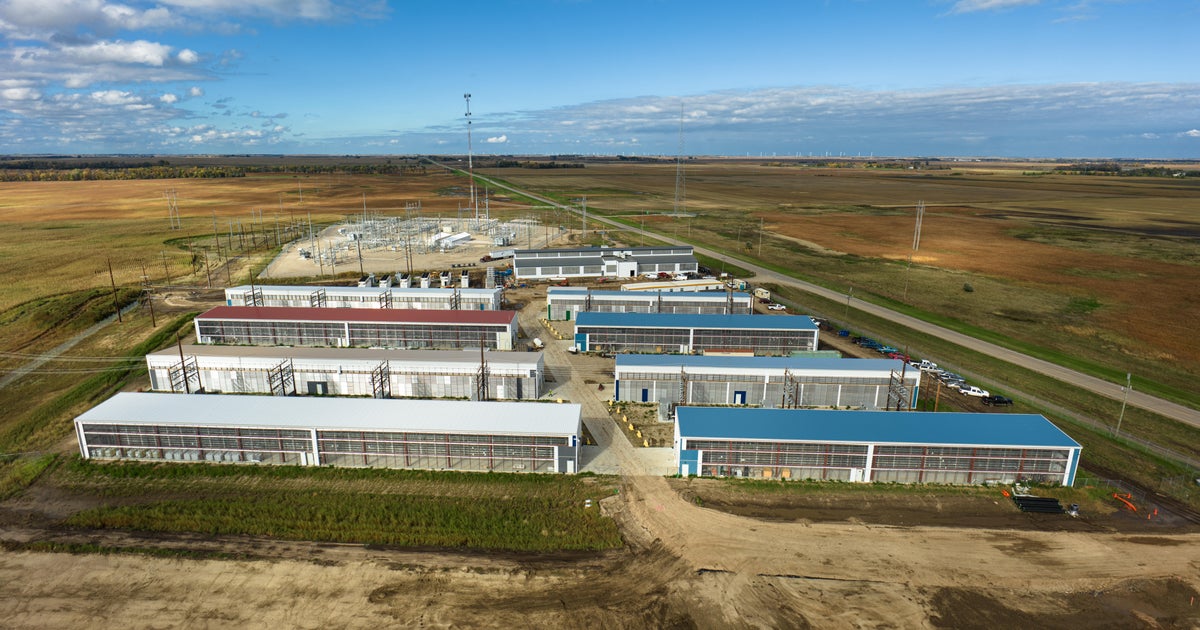
The artificial intelligence boom is accelerating construction of massive data centers across the United States, transforming farmland, shrubland and forest into industrial sites while intensifying disputes over electricity, water and infrastructure. More than 1,300 data centers currently operate in the country, and another 2,231 projects are planned or in development, according to Cleanview, a market intelligence firm.
Data centers existed long before generative AI, but the newest wave includes hundreds of hyperscale facilities designed to support the computing demands of AI systems. About 100 operating facilities qualify as hyperscale centers, consuming at least 100 megawatts of power at peak capacity.
Farmland and undeveloped land become construction sites
Satellite imagery reviewed by The Washington Post shows that many data centers are being built on land that was previously used for farming or remained undeveloped. Roughly 40% of current hyperscale facilities were built on previously developed land, while the rest replaced farmland, shrubland or forest, according to CBS News.
The shift is changing the physical landscape around communities where large technology projects are proposed. The facilities require extensive buildings and supporting infrastructure, making their impact broader than the data center structures alone.
The construction surge reflects the growing computing requirements of artificial intelligence. Companies are building facilities to power AI services, but the projects are also creating conflicts over how communities should use land that has supported agriculture, remained open space or served other local purposes.
AI facilities are straining the power system
Data centers consume large amounts of electricity, and some developers say existing utility systems cannot provide enough capacity quickly. Kevin Schaul, a senior graphics reporter at The Washington Post, told CBS News that companies are responding by going off-grid and building their own power plants.
Those systems can include repurposed jet engines and other available equipment, Schaul said. Building private generation allows companies to secure the electricity needed for their facilities while avoiding a wait of several years for the broader grid to expand.
The approach has also raised concerns about costs and reliability for other electricity users. Some companies are building their own grids partly to address criticism that data centers could strain the electric system and increase utility costs for residents.
That concern is also driving federal legislation. A bipartisan House bill would require data centers to pay for new energy infrastructure rather than shifting those costs to households, farmers, seniors and small businesses, according to a report on the bill. The House voted 417-3 on Sept. 16 to advance the measure.
Opposition is spreading across states
Communities have cited concerns about data centers’ effects on local water and power supplies. In the second quarter of 2026, advocacy groups disrupted at least 45 developments across 27 states, representing projects valued at $68 billion, according to Data Center Watch, which tracks public opposition.
The group said opposition became more geographically widespread and more visible online during the period. Petition activity expanded, while campaigns increasingly focused on statewide policy, utility regulation and infrastructure rather than only individual construction proposals.
Some communities have gone further by imposing moratoriums before developers expressed interest or submitted applications, according to the report. Data Center Watch said 30 states have introduced or adopted legislation, or taken other actions, addressing concerns that include the effect of data centers on utility costs.
Developers offer incentives as scrutiny grows
Technology companies and other developers are attempting to win local support with financial incentives. Data Center Watch reported that some proposals included direct cash payments to residents in exchange for help securing approvals.
Those offers illustrate the stakes surrounding new facilities, but they have not eliminated resistance. Grassroots campaigns have already blocked or disrupted some projects, while other communities are seeking rules before development proposals arrive.
The disputes leave local governments balancing potential construction against questions about land use, electricity, water and infrastructure costs. As more AI-focused facilities move from planning to construction, the debate will center on how developers supply power, who pays for supporting systems and whether communities approve projects before opposition intensifies.