
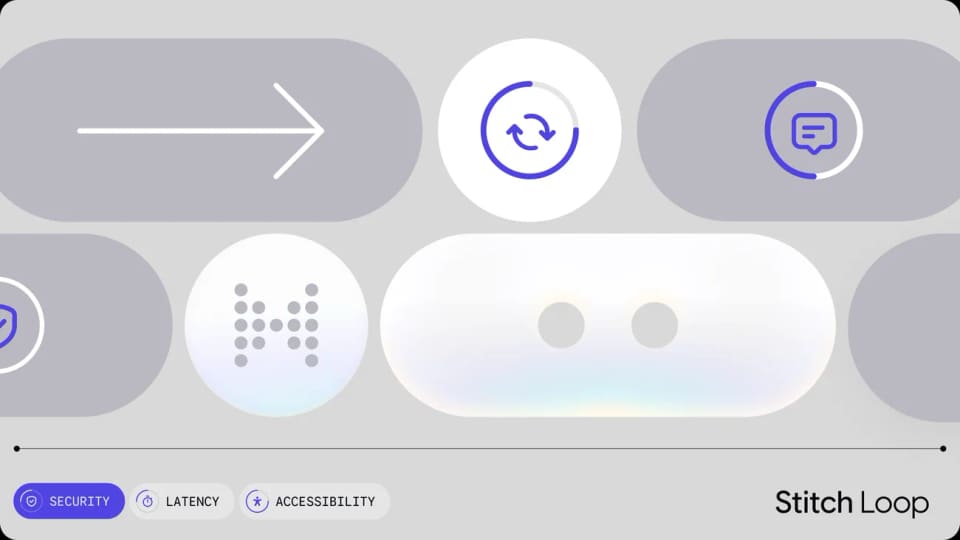
Google Labs introduced Stitch Loop on November 18, 2026, extending its product-building work into ongoing software maintenance. The experiment connects a codebase with live product metrics so teams can review suggested improvements after a release.
What does Stitch Loop change?
Stitch Loop keeps working toward a measurable product goal after code has shipped, according to Google's announcement. Google describes existing coding agents as focused on building features and completing pull requests; Loop is intended to keep observing what happens in production.
The workflow starts with GitHub and product context such as logs, feedback and user behavior. Google says teams can supply that context through more than 180 integrations, custom MCP servers or local CLI uploads. That context feeds continuing cycles of suggestions, proposed solutions, implementation and reflection on live results.
What does the agent actually do?
The agent develops an approved direction in an isolated cloud sandbox and opens a GitHub pull request. Where relevant, that request includes screenshots or videos of its work. Nothing merges until a person reviews the pull request.
The three default loops cover cybersecurity, latency and accessibility. Teams can also create a custom goal, such as improving checkout conversion. Google says the security loop combines Gemini 4 Carbon with CodeMender to flag vulnerabilities, supply evidence and propose patches.
Who can use Stitch Loop today?
The global waitlist is open, with eligible Google AI Ultra users receiving priority access. A waitlist registration is not immediate general availability. Google also describes Slack digests and connections to existing coding agents through the Stitch CLI and MCP.
What should teams check before adoption?
Franklin analysis: the useful starting point is a narrow metric with a clear owner and a reviewable change. Connecting live feedback can make maintenance proposals more relevant, but it also makes the quality of the supplied context important. Teams should examine the evidence, code changes and resulting metric together before expanding an automated loop's scope.
For teams comparing review workflows, our AOSplane page covers planning and checking coding-agent pull requests.
