
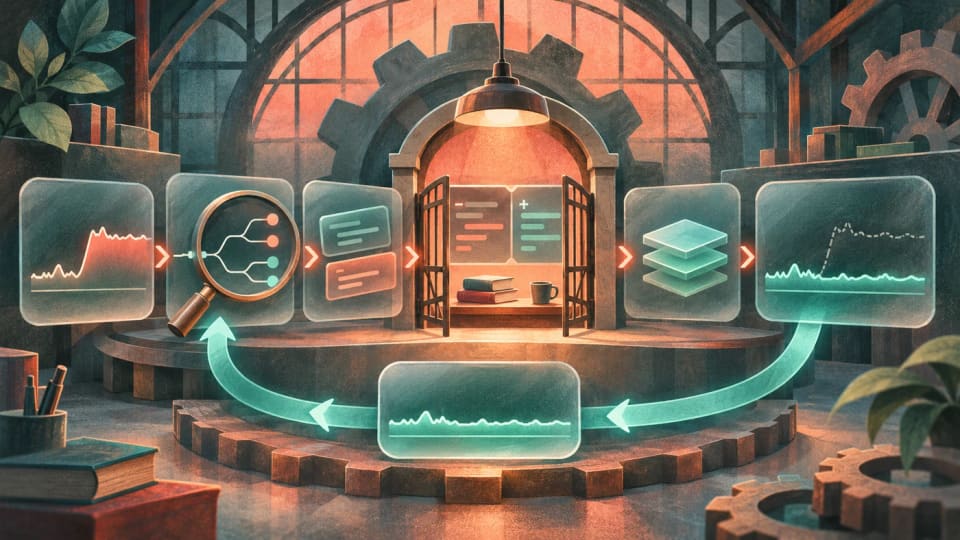
OpenAI described its internal Performance Factory on November 19, 2026, explaining how agents investigate ChatGPT performance problems and propose fixes. The engineering article presents a workflow with human review, rather than an announcement that the system independently ships every change.
What does Performance Factory coordinate?
OpenAI describes a task tracker, a dispatch loop, the cloud Codex API and event subscriptions. An investigation can progress through review, a proposed pull request and a later check of whether the deployed fix restored performance. Engineers review, merge and deploy the changes.
The company reports more than 1,700 investigations and more than 600 identified root causes in just over three months. In a manual review of 100 root-cause findings, it judged 70% accurate; the remainder needed refinement or had not established causality. These are OpenAI's internal assessments, not an independent benchmark.
What remains difficult after a diagnosis?
OpenAI says fixing a problem is harder than diagnosing it. The article describes cases needing human guidance and architectural tradeoffs. It also discusses checking performance after deployment instead of treating a merged change as evidence that the regression is resolved.
The system is described as internal engineering infrastructure. The article does not establish a generally available Performance Factory product that readers can activate for their own services.
What can engineering teams take from the design?
Franklin analysis: the useful unit of work is a verified recovery, not merely a plausible explanation. Teams adapting this pattern should decide what observation opens an investigation, who can approve a change and which measurement closes the task.
Keep diagnosis quality and fix quality as separate checks. A convincing root-cause story may still lead to a risky or incomplete patch. Preserve enough evidence for a reviewer to challenge the explanation, then compare the deployed behavior with the intended baseline. If the result is partial, keep the remaining work visible rather than recording the whole incident as solved.
