
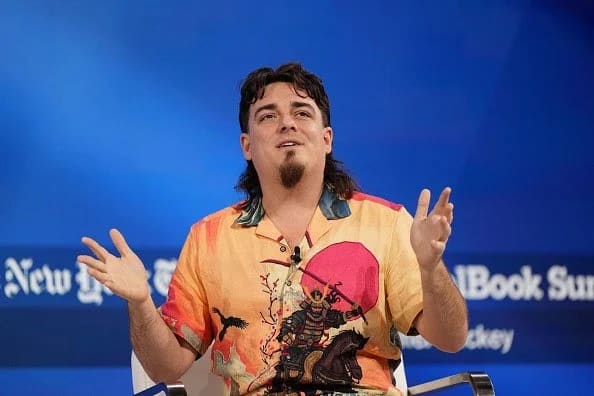
Palmer Luckey warned at The New York Times DealBook Summit on November 18, 2026 that AI-enabled attacks are advancing faster than older systems can respond. TechCrunch's report presents his assessment of the security situation rather than a new, independently established attribution for particular outages.
What did Luckey argue?
The Oculus founder and Anduril Industries co-founder described a mismatch between fast-moving attackers and organizations operating outdated technology. In TechCrunch's account, he argued that defenders need to adopt better capabilities more quickly.
The distinction between a warning and an established finding matters here. The report recounts Luckey's claims about adversaries and the pace of exploit creation. It does not provide a forensic analysis showing who caused each recent technical disruption.
What does the report say about outages?
TechCrunch says government officials largely attributed the recent technical issues to companies rushing to patch systems against newly discovered vulnerabilities. That description differs from proving that every outage was itself a successful cyberattack.
Luckey focused on the underlying difficulty of securing older systems. His remarks are relevant to preparedness discussions, but they do not supply a universal explanation for an individual service failure or identify the vulnerability affecting a reader's own organization.
Could AI also help defenders?
Luckey argued that the long-run advantage could favor the side using AI most effectively for defense. This is his outlook, not a measured result establishing that any particular product prevents an attack.
Franklin analysis: translate a broad warning into a specific review of systems, patch ownership and response time. A team can ask which assets are exposed, which changes have been tested and who is responsible when a patch disrupts service. Those questions produce a more actionable next step than treating the conference remarks as proof of an incident. The next useful evidence would identify affected systems, confirmed causes and documented defensive outcomes.
