
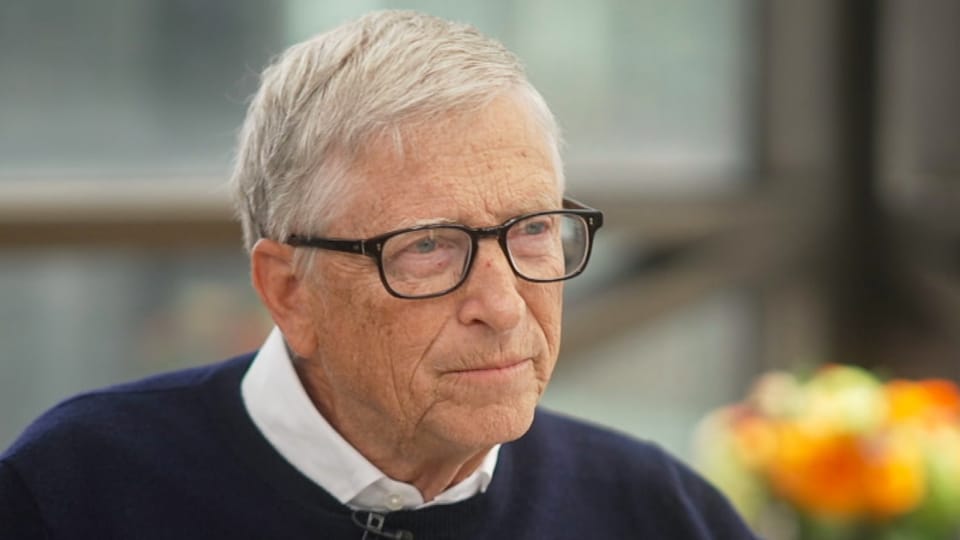
Microsoft co-founder and philanthropist Bill Gates is calling for federal lawmakers and law enforcement officials to help regulate artificial intelligence, arguing that voluntary safeguards from technology companies cannot adequately address the risks.
Gates said governments should establish required monitoring while avoiding rules that would dramatically slow the industry, according to NBC News. “No one thinks self-regulation is enough,” Gates told NBC News’ “Meet the Press” in an interview scheduled to air in full Sunday. Asked whether Washington should pass legislation, he responded, “Absolutely.”
Gates calls for required safeguards and monitoring
Gates said politicians and law enforcement agencies need to participate in decisions about how AI systems are monitored and what safety measures developers must adopt.
“You need law enforcement and the politicians to get into the discussion about what safeguards and monitoring look like,” Gates said. “And that has to be a required thing. And it will be a little bit of overhead for the industry, but not a dramatic slowing of what they’re doing.”
His comments come as AI companies face growing pressure to slow the race toward more capable systems. Earlier this month, the CEOs of Anthropic and OpenAI agreed that development should slow, although the companies have not presented a shared path involving federal legislation.
Jacob Coxon, a whistleblower who recently resigned from Anthropic, has criticized both companies publicly. Coxon said neither was acting responsibly and accused them of “racing straight to self-improving superintelligence and gambling with our lives.” He also said people working in AI believe the technology could kill everyone by the end of the decade.
Gates did not dismiss that possibility, but focused on a more immediate risk: bad actors using existing or near-term AI tools to cause mass harm.
“AI is certainly powerful enough to drive events that, you know, cause a billion deaths,” Gates said. He added that there has never been a weapon as powerful as the combination of people with ill intent and the latest AI tools.
Industry leaders disagree over who should set the pace
The debate has exposed different views among technology executives about whether AI safety requires industry coordination or government intervention.
Anthropic CEO Dario Amodei has called for federal and global cooperation in an essay about slowing AI development. He argued that regulation covering all U.S. frontier AI companies would also apply to companies unwilling to cooperate voluntarily. Amodei wrote that global coordination would require cooperation with China, which he described as having the most advanced AI capabilities among autocratic countries.
OpenAI CEO Sam Altman also called for international standards in remarks before the United Nations. Those standards, he said, should measure AI capabilities, assess risks, determine whether safeguards are sufficient and preserve meaningful human oversight.
Meta founder and CEO Mark Zuckerberg took a different position. Zuckerberg said he did not believe the industry needed broad coordination, arguing that each laboratory should take the time it needs internally to address safety issues before proceeding.
Microsoft President Brad Smith separately criticized AI companies for treating development as a race. Speaking at a United Nations session on AI and human development, Smith said companies should put public safety ahead of being first to release more advanced products.
Washington and states weigh competing approaches
Federal lawmakers have not yet established a regulatory framework for controlling the pace of AI development. Speaker Mike Johnson, Republican of Louisiana, previously declined to bring House lawmakers back to Washington for legislation and said he would defer to AI companies.
Johnson said Congress needed to create guardrails and safety measures, but argued that companies had not yet offered a clear path forward involving federal law. He also cautioned that Congress should not rush into legislation that could harm national security.
Some state governments have already started developing their own approaches. California Gov. Gavin Newsom signed an executive order creating a board of experts tasked with preparing a plan to strengthen the state’s AI safety laws.
Maryland Gov. Wes Moore and New York Gov. Kathy Hochul also released AI-related regulatory plans. Moore’s order established what his office called a three-pronged approach, while Hochul’s plan created an Office of Digital Innovation, Governance, Integrity and Trust to oversee legal compliance for AI companies.
The emerging divide is not only about how much regulation to impose, but also who should define and enforce safeguards. Gates’ position places required monitoring and government participation at the center of that process, while several technology leaders continue to emphasize voluntary action or internal controls.