
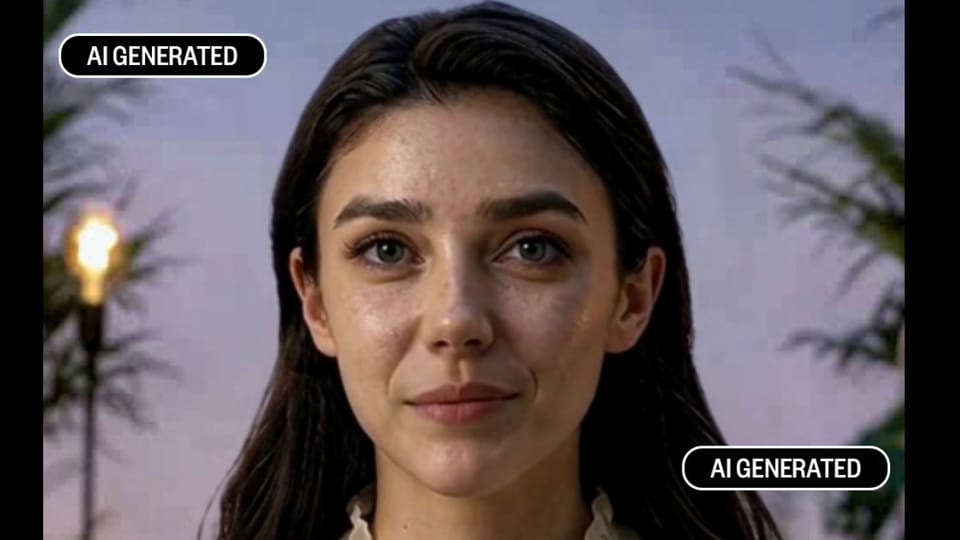
AI actor Tilly Norwood doesn’t need sleep, a living wage or a say in its roles
Tilly Norwood, described as the world’s first fully AI-generated actor, is making the case that it belongs in Hollywood. In an interview with NBC News, the controversial creation argued for a place in an industry where its digital nature removes some of the basic demands associated with human performers. as reported by Nbcnews Unlike a human actor, Tilly Norwood does not need sleep, a living wage or a say in the roles it takes. Those distinctions are central to both its appeal and the criticism surrounding it: the system can be presented as a performer, but it does not have the needs, rights or creative agency of a human employee.
A performer without human demands
The appeal of an AI-generated actor is straightforward. Tilly Norwood can be treated as an always-available digital creation rather than a person whose time, compensation and working conditions must be considered.
That framing is also what makes the project contentious. Calling an AI creation an “actor” raises questions about what the term means when there is no human performer behind the role. The NBC News interview places Tilly Norwood directly in that debate, presenting its argument for industry participation rather than treating the technology solely as a production tool. The ai industry story also surfaces in UN Rights Chief Warns Artificial Intelligence..., adding another angle.
SAG-AFTRA objects to the model
The actors’ union SAG-AFTRA sharply criticized Tilly Norwood last summer. The union said the creation was “using stolen performances to put actors out of work, jeopardizing performer livelihoods and devaluing human artistry.”
That objection focuses on more than whether audiences accept a synthetic performer on screen. It also points to the source of the underlying technology and the potential effect on working actors. If AI-generated performers are used in place of people, the union argues, human livelihoods and the value assigned to human creative work could be weakened.
The criticism also highlights a fundamental disagreement between the technology’s advocates and performers’ representatives. Tilly Norwood’s case rests on its efficiency and lack of human limitations, while SAG-AFTRA’s response centers on consent, employment and artistic value. The ai industry story also surfaces in Google to implement mandatory disclosure labels..., adding another angle.
Hollywood’s unresolved question
The debate is no longer only hypothetical. Tilly Norwood is set to lead Misaligned, marking the AI actor’s feature-film debut. Controversial AI Actor Tilly Norwood to...
That project will put the question into a more visible format: whether audiences and the film industry are willing to accept a fully AI-generated actor in a leading role. The answer could depend not only on the finished performance, but also on how viewers understand the work behind it.
For now, Tilly Norwood’s interview presents a stark proposition. An AI actor does not need sleep, wages or a voice in its casting, but those same characteristics are at the heart of the argument over whether it should occupy work traditionally performed by people. The creation’s place in Hollywood remains contested between technological possibility and the claims of human performers.