
Scribase for agent-managed application backends
Scribase provisions application backends through a CLI or MCP connection. One project can remain free, while temporary agent projects have a separate claim process.
Scribase supplies an application backend that a developer or coding agent can provision through a CLI or MCP server. Its official site combines Postgres, authentication, file storage and realtime services, with functions and other application features in the same account.
How do agents use Scribase?
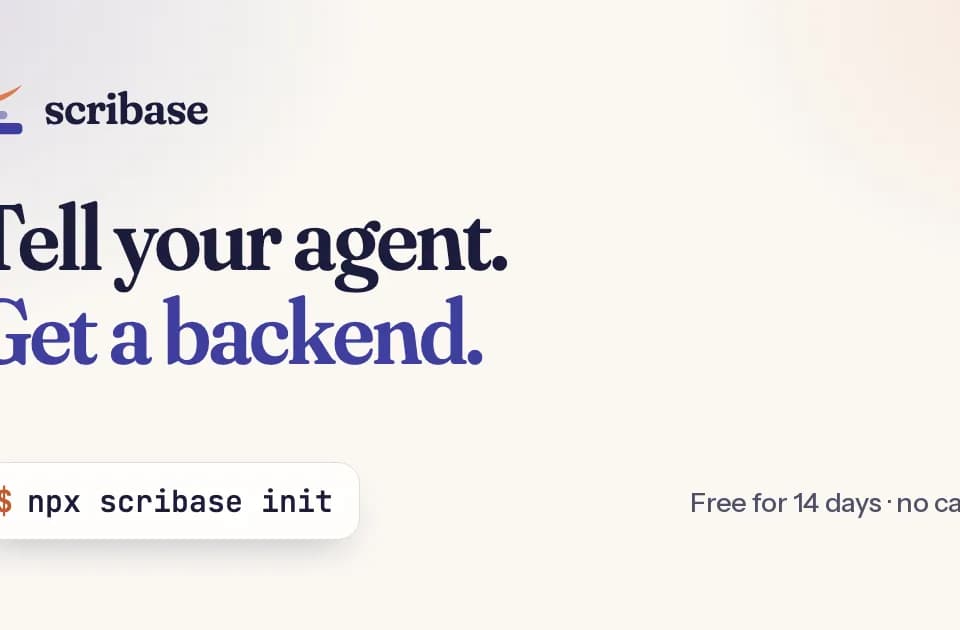
The documented starting command is npx scribase init. The publisher says it detects the framework, creates or reuses a project, writes an environment file and a client module, and can set keys on a linked Vercel project. Supported frameworks named on the page include Next.js, Expo, SvelteKit and Flutter.
Scribase also describes compatibility with the standard Supabase JavaScript client. Its evidence table separates calls tested against a fresh hosted project from calls covered only by its compatibility suite. That distinction is useful when deciding which authentication, storage or realtime flows need a project-specific check.
What is a temporary Scribase project?
A temporary project lets an agent start without an account and runs for 72 hours. Keeping it requires signing up and adding a card, after which it becomes a paid Hobby project with the same data and keys. The site says temporary projects refuse function deployments until they are claimed.
For ordinary projects, public tables have row level security enabled and forced on automatically. The migration tool refuses changes that would leave a public table without a policy. Those controls still require a developer to design appropriate access rules for the application.
What does Scribase cost?
The pricing page lists one free project with no time limit, a 0.5 GB database and 1 GB of files. A new account begins with 14 days of Hobby, and additional projects pause with their data retained if that trial ends without a card.
Hobby costs US$5 per project per month and Pro US$25. Free and Hobby projects scale to zero while idle; Pro stays warm. Franklin's practical first step is to check the exact client calls the app uses and test its access policies before moving a working backend. Scribase also documents a full export bundle for moving elsewhere.
Before you try it
Frequently asked questions
How does Scribase count paid projects for billing?
Hobby and Pro are billed monthly using the highest number of simultaneous projects during the billing period. The pricing page says the count is recorded hourly.
Official sourceDoes a free Scribase project get deleted when idle?
The publisher says Free and Hobby projects scale to zero when idle and wake on the next request. They are not deleted simply for inactivity.
Official sourceCan a temporary Scribase project deploy functions?
No. The official page says a no-account temporary project supports database, sign-in, storage and realtime but refuses function deployments until claimed.
Official source