
Mole for research reports with quoted claims and visible disagreements
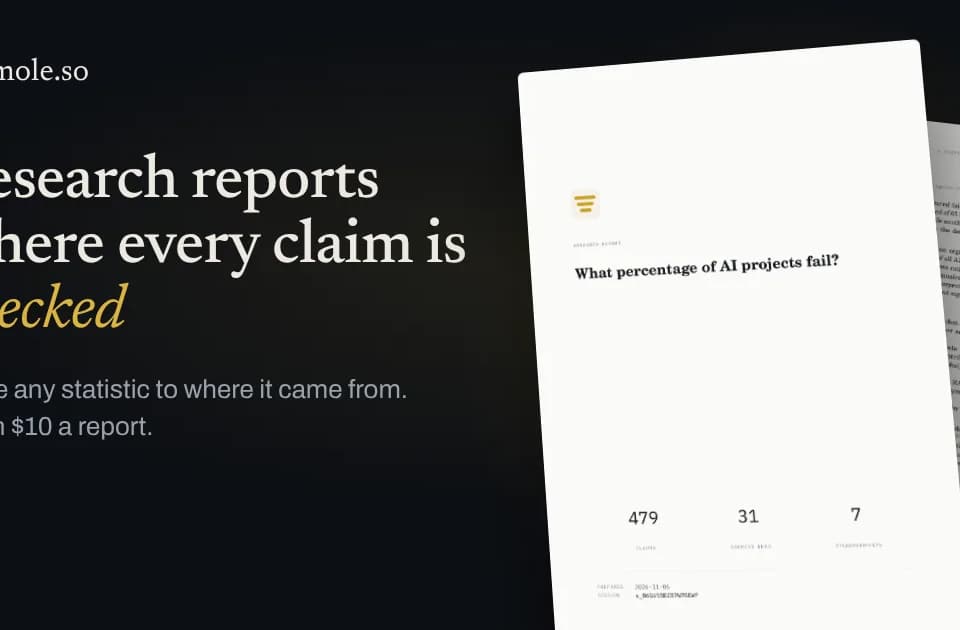
Mole researches a question at a chosen depth and produces a paid PDF report with quoted claims, disagreements, coverage and a verification receipt.
Mole turns a research question into a paid report with quoted evidence and a record of source disagreements. Its official website describes a document-oriented workflow for readers who need to inspect where a finding came from, rather than stop at a short chat answer.
How does the research process work?
Enter a question and choose Quick, Standard or Deep research. The publisher says Mole follows leads, rereads quoted passages and drops claims that do not hold up. A prompt does not need to be tuned into separate subquestions before starting, according to the product description.
The finding is written after leads have closed or the selected tier’s limit has been reached. That stopping rule matters: choosing a depth also limits how far the system follows the available evidence.
What is in the report?
The site describes a PDF containing scope, findings, disagreements, an evidence table, coverage and a verification receipt. Each claim points to a source sentence and the date it was taken. The publisher says it checks quoted text against the source again after writing.
Competing statements remain visible as competing quotations. The product’s examples distinguish a source that first reported a claim from pages that repeated it. Those examples illustrate the intended document structure; Franklin has not independently reproduced the research runs.
How do the paid tiers differ?
Mole charges per document rather than through a subscription. Quick, Standard and Deep increase the permitted research time, sources per lead and replanning passes, while keeping the same report structure.
The page also says that when Mole finds nothing, it runs again without an extra credit. Inspect the current depth limits and sample reports before deciding which tier suits a question.
What still needs human review?
Franklin analysis: a matching quotation establishes where a sentence came from, not whether the underlying source was correct. Read the scope and unresolved disagreements alongside the finding, and open important original sources before using a report to support a consequential decision. The chosen depth can leave leads unexplored even when the finished document looks complete.
Before you try it
Frequently asked questions
What happens when sources disagree?
The publisher says competing figures and their dated quotations are kept side by side. The report does not silently choose a winner on the reader’s behalf.
Official sourceWhat does changing research depth do?
Quick, Standard and Deep change the research time, number of sources per lead and replanning allowance. The report’s document structure stays the same.
Official sourceWhat does the verification receipt represent?
The publisher says each claim has a verbatim source quotation and that quotations are checked again after the report is written. This is a description of its checking process, not independent proof that a source claim is true.
Official source