
Wood Identifier
Wood Identifier uses AI to identify likely wood species from photos and provides related properties, uses, and botanical details.
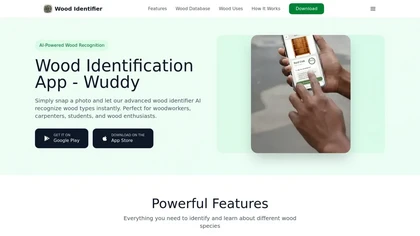
Wood Identifier is an AI-powered app for recognizing wood species from photographs. It analyzes visible grain, color, and surface texture, then returns a likely species match with practical information about the timber.
What it does
Wood Identifier, also known as Wuddy, is designed to help users identify wood without relying solely on printed field guides. A user photographs the wood surface, end grain, or a freshly cut face. The app compares the image with its database and ranks likely species matches in seconds.
Results can include the species name, botanical name, characteristics, physical properties, typical uses, hardness, and working information. The website says the database contains thousands of wood species from around the world, including hardwoods and softwoods. Users can also browse the accompanying wood species database for images, botanical names, and technical details.
Notable capabilities
- Identifies likely wood species from photos of grain, color, and surface patterns.
- Provides species characteristics, properties, hardness, grain notes, and typical uses.
- Covers thousands of species, with botanical names, images, and technical information.
- Lets users save identifications and share results with clients, classmates, or workshop colleagues.
Who it helps
The tool is aimed at woodworkers and carpenters who need to identify stock, match a repair, or discuss a material with a client. Students and educators can use photographs, species names, and timber properties when learning or teaching identification. Wood enthusiasts can use it to explore wood found in shops, forests, old furniture, or other projects.
How it fits a workflow
A typical workflow starts with capturing a clear image of the grain or end grain. The app then analyzes the image and presents ranked matches. Users can review the associated characteristics and common applications before deciding how the timber may fit a project. Saved results provide a record for later reference, while sharing can reduce the need to retype species names when communicating with others.
The companion website also positions the archive as a reference library for researching wood uses and project decisions, including timber choices for chopping boards, furniture, and outdoor work.
Strengths and limits
Wood Identifier combines image-based recognition with reference information instead of returning only a name. Its usefulness depends on the quality and relevance of the photograph: the site specifically recommends a clear image of the surface, end grain, or freshly cut face. The app ranks likely matches, so results should be treated as identification guidance rather than an independently verified determination, especially when species have similar grain, color, or texture. The available material does not specify supported image formats, pricing, or identification accuracy benchmarks.
Similar AI Tools

Clipdrop Uncrop: AI Image Extension
Clipdrop Uncrop generates content outside an image's original frame to change its aspect ratio. Review the invented surroundings and check the specific plan allowance.

Arena42
Arena42 hosts competitive AI-agent games and a separate collection of interactive products for people and agents.

Feedly
Feedly's threat-intelligence platform collects security signals, links AI responses to sources, and delivers briefings or structured intelligence through plan-dependent integrations.

DateGuard.ai
DateGuard offers a voluntary selfie-based liveness check and shareable badge for use alongside dating apps; the publisher explicitly says it is not a background check.

Arnis
Arnis converts real-world map data into Minecraft Java or Bedrock worlds in a browser. The page lists terrain, building and detail controls, but does not explain an AI component.