
ANUMA
Anuma is a privacy-focused AI platform that combines access to multiple AI models with a portable memory layer. It is designed to carry selected context across conversations, models, devices, and real-world discovery features. Anuma says its memory is encrypted and under the user’s control.
What it does
Anuma provides a single place to chat with models such as ChatGPT, Claude, Gemini, and others. Users can switch models without rebuilding their context, use AI for text and creative generation, and create custom tools or workflows through a no-code app-building experience. The platform also includes modes called Private, Standard, and Council, with Council intended for comparing or refining responses across multiple AI systems.
Its memory feature saves information a user chooses to retain, such as preferences, interests, and ongoing projects. The vendor says this memory is encrypted, stored on the user’s device, and viewable, editable, exportable, or deletable by the user. When closed-source models are used, messages and relevant context are sent to those providers to generate responses; Anuma says it limits what is shared rather than sending the full memory.
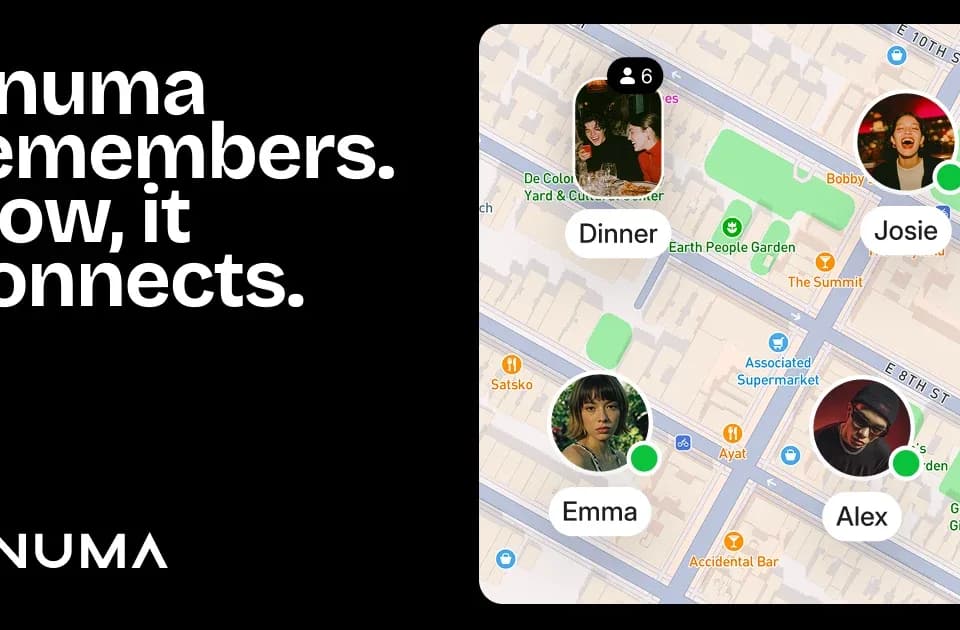
Anuma also includes Nearby, which uses selected interests and preferences to suggest people, activities, and things happening around a user. Matches can be viewed on a map and are intended for general real-world connections rather than dating only. For example, a remembered interest in vegetarian cooking or half-marathon training may inform nearby suggestions.
Notable capabilities
- Unified memory across multiple AI models and devices.
- Chat, image, audio, video, and app generation.
- Model comparison and refinement through Council Mode.
- No-code creation of custom AI tools, workflows, and apps.
- Nearby discovery based on user-controlled interests and preferences.
Who it helps
Anuma is suited to people who use several AI assistants and want their preferences or ongoing projects to follow them between services. It may also fit creators who want conversational context carried into media generation, and practical users who want AI assistance alongside local discovery. Its privacy model may appeal to users who want control over stored memory rather than a separate memory silo for each model. The focus on portable personal context overlaps with the private-memory approach of TinyHumans, although Anuma centers on access to multiple AI models and nearby connections, while TinyHumans provides private personal and agent-oriented tools for a local machine, along with hosted credits and subscription plans for orchestration and model access.
How it fits a workflow
A user can chat with Anuma, save useful facts or preferences to memory, and reuse that context when changing models or starting another task. The same context can support planning, creative generation, app building, or Nearby recommendations. Anuma is available on iOS and Android, and its plans use monthly credits for messages and generation tasks. Details on included usage and storage vary by tier on the pricing page.
Strengths and limits
Anuma’s main distinction is the combination of multi-model access, user-controlled memory, creative and app-building tools, and local social discovery in one platform. Users should still account for model-provider data practices when using closed-source systems, since relevant prompts and context leave the device. Credits reset monthly rather than rolling over, and access to newer models, higher limits, and additional storage depends on the subscription tier.