


Opper.ai
Opper is an EU-hosted model gateway with pay-as-you-go access, request fallbacks, and optional controls for budgets, routing, and retention.
Sakana Fugu offers a coordinated pool of models through one API, with task-dependent orchestration and an explicit EU/EEA availability restriction.
Sakana Fugu is a model-orchestration service from Sakana AI. Its product page describes a multi-agent system exposed through a single model API. The service selects and coordinates models for complex, multistep tasks, giving developers one integration point rather than requiring them to prescribe every agent's role themselves.
Sakana describes Fugu as coordinating a diverse pool of specialized models. The publisher says it handles model selection and switching for each task and learns collaboration patterns rather than relying on a manually specified team structure.
That describes an orchestration layer, not a promise that every request reaches one fixed underlying model. Before integrating it, check the available documentation for how requests and outputs are represented and what control your application has over the workflow. A single endpoint can simplify an integration while leaving important operational choices inside the service.
The page advertises improved cost-performance and frontier-level performance without single-vendor dependency. Compare the advertised performance with your existing baseline on tasks that reflect your application's real requirements before using it to justify a production decision.
Keep an existing baseline and define what a successful result must contain. Review incomplete answers and unsupported assertions as well as useful outputs. Ask about latency, pricing and usage limits before estimating the cost of a multistep job; the short product introduction does not publish a complete schedule for those details. Avoid assuming that access to several models guarantees a correct answer.
Sakana's page says Fugu is not yet available in the EU or EEA while the company works toward GDPR and region-specific compliance. Confirm eligibility before planning an integration for users or infrastructure in those regions. That restriction should not be reframed as an existing compliance certification.
For sensitive inputs, review the service's applicable processing terms and which model providers may receive data. The page's single-API description does not establish that every operation remains within one provider or location. Start with nonsensitive evaluation material and confirm the required access and contractual arrangements before connecting production records.
Before you try it
The FAQ says the standard Fugu pool allows model opt-outs through console settings, but Ultra and Max use fixed pools. Enterprise-specific configurations can be discussed with Sakana. Confirm the exact variant and data route before assuming one exclusion setting applies to all models.
Official sourceIt is offered through an OpenAI-compatible API. The publisher describes pointing an existing client or coding harness at its endpoint with a Fugu key. Test compatibility and cost on representative requests; matching an API format does not prove that every client feature or workflow behaves identically.
Official sourceThe current product page explicitly excludes EU and EEA member-state users while the publisher works on its regulatory requirements. It says access is available elsewhere outside Japan, subject to local rules and network conditions. Check current service eligibility rather than trying to bypass a regional restriction.
Official sourceOpper is an EU-hosted model gateway with pay-as-you-go access, request fallbacks, and optional controls for budgets, routing, and retention.

OpenRouter provides a unified API for models served by multiple providers, with routing, fallbacks and shared credits. Developers still need to evaluate models, costs and data policies.
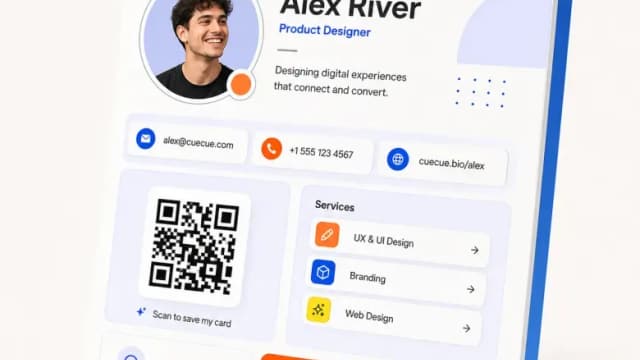
CueCue creates shareable web cards for events, product offers and business profiles, with examples that combine information and a response action.

Lemonade provides a local AI runtime with desktop controls and compatible API endpoints, plus a portable service developers can bundle into their own applications.

Prompt2CAD turns a brief or existing model into editable CAD, with dimensional changes, preliminary parts lists and exports for downstream design and fabrication review.

HouseDesign generates AI-powered interior and exterior home design concepts from uploaded photos, with selectable styles, lighting, ambience, and optional prompts.