
Lemonade
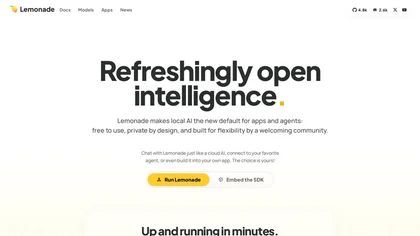
Lemonade installs a local AI runtime with a GUI, CLI, and API endpoints. You can manage models through its own interface or connect another application to the running service. Developers also have a portable build for packaging the service inside a product.
Run models locally or connect an application
The project presents Windows, Linux, and macOS support. Its API documentation lists OpenAI-compatible, Ollama-compatible, and Anthropic-compatible interfaces, alongside an MCP gateway. Those interfaces can reduce integration work, but compatibility does not establish that every upstream feature or request option behaves identically. Check the endpoint your application actually uses.
A local runtime still needs suitable models and hardware. Test a representative prompt and the intended context size on the target computer before making response-time commitments. Franklin has not measured Lemonade's throughput or compared its supported backends.
Bundle a separate service with your app
The embeddable documentation describes a portable lemond service that developers can bundle into an application. The host application manages the subprocess and supplies configuration, including model defaults and backend choices.
That gives developers control over their application's runtime rather than depending on a user's existing desktop installation. It also creates packaging responsibilities: decide which backend assets ship with the installer, which models download later, and where application-specific files live. A runtime bundled with an app does not remove model licensing or distribution requirements.
Use documentation for the installed version
The API reference says a running server serves its own documentation through GET /v1/docs and individual documentation pages. The reference therefore matches the installed version and remains available offline. This is useful when an embedded application ships a fixed runtime while the public documentation continues changing.
For an integration test, verify server startup, a model load, and a real request through the chosen compatibility interface. Include shutdown and failed-download handling. Review network connections and storage locations before describing an application's whole workflow as private merely because inference runs locally.