
ResearchMonkey
ResearchMonkey is an AI-powered research workspace that brings together more than 40 specialized tools for finding, summarizing, organizing, and analyzing information. It is designed for students, academics, and business professionals, with tools spanning academic research, literature reviews, citations, market analysis, and financial research.
What it does
ResearchMonkey supports research tasks across documents, webpages, videos, presentations, and academic resources. Its documented tools include PDF, webpage, YouTube, and presentation summarizers; academic resource discovery; research briefs; literature-review assistance; publisher discovery; and market and competitor research. The platform says its outputs can include summaries, key insights, statistics, citations, and exportable results.
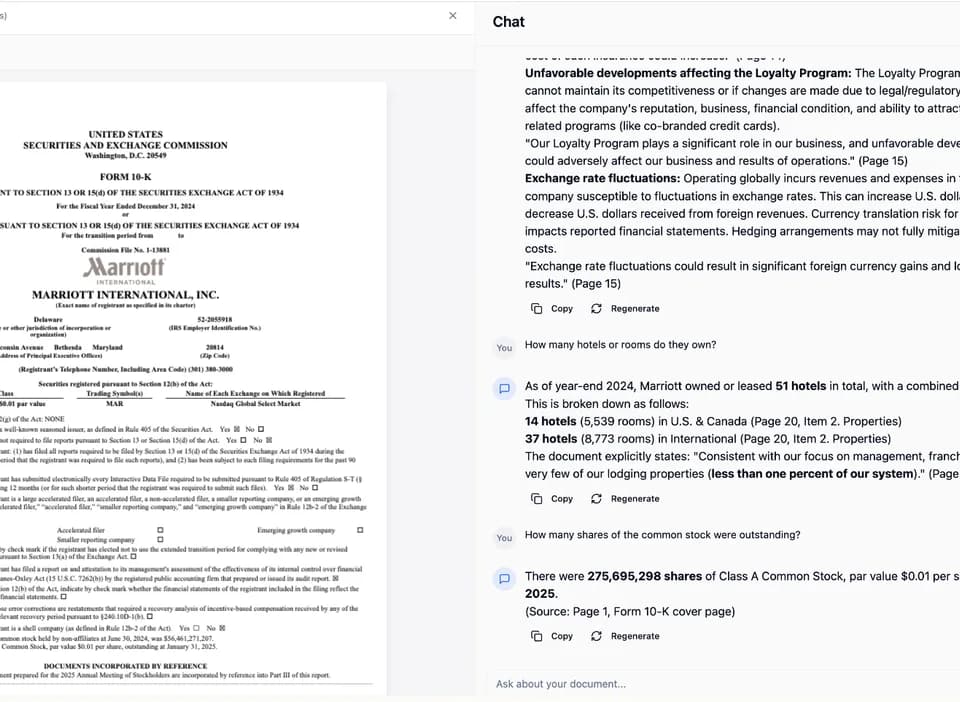
The service also includes a separate multi-model chat workspace. Users can attach files, webpages, or YouTube videos, select a model, or let the service route a prompt among models from ChatGPT, Gemini, Claude, DeepSeek, Perplexity, and Grok. Models can be switched within the same conversation.
Notable capabilities
- Summarizes PDFs, webpages, YouTube videos, and presentations.
- Supports literature reviews, academic resource discovery, publisher discovery, and citation management.
- Provides market and competitor research tools, as well as financial research capabilities.
- Saves results to a dashboard where users can edit files, organize folders, create tasks, compare results, and chat with saved files.
- Exports citations in APA, MLA, and BibTeX formats and can generate LaTeX tables.
Who it helps
The platform is aimed at students and academics working with papers, citations, and literature reviews, as well as business professionals conducting market, competitor, or financial research. Its mix of academic and business tools may suit users who want one workspace for multiple research formats rather than a single-purpose summarizer.
How it fits a workflow
A user can collect sources and tool results in the dashboard, place materials into folders or reading lists, and continue working with saved files. The documented workflow includes creating tasks, comparing results, chatting with stored materials, editing files, and exporting research outputs. A Chrome extension can summarize public webpages, save sources to a reading list, and open ResearchMonkey tools in a browser side panel.
The multi-model chat service uses credits: the publisher states that each model, Router, or Agent reply costs one credit, while attached sources do not add credits. Reading, copying, sharing, and exporting existing threads are described as free. The official pages describe credit-based limits, but a reliably extractable subscription-price table is not provided here.
Strengths and limits
ResearchMonkey’s main strength is breadth: it combines academic discovery, document summarization, citation work, business research, file organization, and multi-model chat in one research-oriented workspace. Its practical fit depends on whether users value that range and structured workflow over a narrower specialist tool. The publisher documents capabilities and credit rules, but the available official information does not establish comparative accuracy, research quality, or subscription prices.