
Newsletrix
Newsletrix helps newsletter operators organize competitor emails and compare how other publishers frame their offers. Its analysis covers subject lines, calls to action and send-time patterns, with AI-generated recommendations and structured SWOT insights. The service is aimed at teams that already read competitors' newsletters but want a more searchable record than an inbox and scattered notes.
Build a comparison set you can interpret
The company's description says you can forward a newsletter to a Newsletrix inbox and receive an analysis. That input gives the platform the visible email: its wording, design and delivery time. It does not by itself reveal a competitor's subscriber segments, deliverability or revenue.
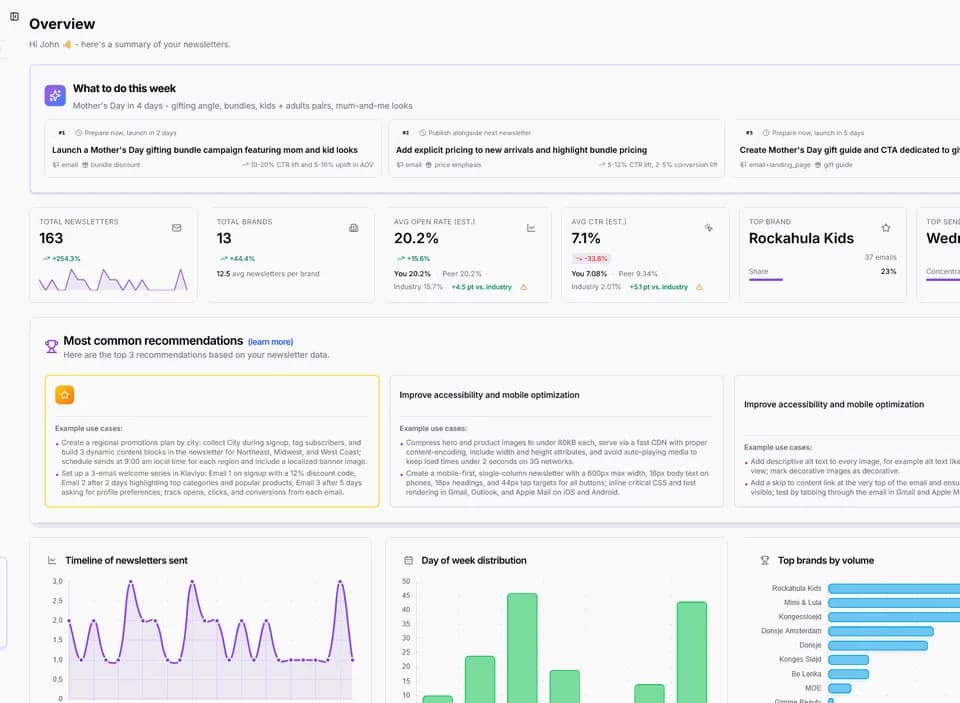
The homepage shows a campaign calendar and an hour-by-day heatmap. Those views can help you notice repeated promotion periods or crowded send windows. Treat the displayed examples, including the Tuesday-morning peak, as illustrations rather than a universal recommendation for your audience. A competitor's timing may reflect its location or sales cycle.
Choose newsletters with comparable readers and business goals. Mixing a retail discount campaign with a paid editorial digest can make subject-line and CTA comparisons less useful, even if both produce a high score.
Use the scoring to ask narrower questions
Newsletrix describes subject-line scoring for length, emoji use, uppercase text, sentiment and keywords. The homepage says its benchmarking uses estimated open rates. Those estimates are not access to a competitor's private email analytics. Check what the estimate means before using it as evidence that a particular wording performed better.
AI recommendations cover content priorities, design and structure, and engagement tactics. Examples include descriptive image alt text and a skip-to-content link. You can inspect whether those changes make your own email easier to use, then test them with your subscribers. Promotional recommendations such as countdowns need a real deadline; social-proof suggestions need genuine reviews or verified activity.
The AI filter assistant illustrates finding pricing-related newsletters within a week. That is a practical research question: compare how publishers explain a price change, rather than copying whichever headline receives the highest score.
Keep your results separate from competitor patterns
The site advertises a free plan without a credit card. The captured pages do not establish its numeric tracking allowance or paid-plan prices, so confirm current limits before importing a long history.
Newsletrix claims time savings and fast first analyses, but no independent study accompanies those figures here. Evaluate it on whether it helps you retrieve relevant examples and form specific tests. Record your own opens, clicks and conversions after a change. A competitor pattern can suggest a hypothesis; your subscribers' response determines whether that hypothesis fits your newsletter.