


PicText: replace words in a finished image without its design file
PicText edits text inside photos, screenshots and marketing images through a browser, with results that depend on the source image.
UiChemy describes four routes into WordPress, including Figma conversion, prompt-based sites, builder code and imports from AI builders.
UiChemy targets the handoff between a design or AI-built prototype and a WordPress site a client can maintain. Its publisher describes native, editable output for Elementor, Gutenberg and Bricks, with several ways to begin: a Figma design, a client brief, a prompt or an existing AI build.
The UiChemy product page lists Figma-to-WordPress conversion with editable layers instead of an iframe. That distinction matters at handoff: the client should be able to change the resulting content in their chosen WordPress builder. The publisher also advertises responsive output, but Franklin has not tested conversion fidelity across designs.
Before converting a client project, try a representative page with its actual typography, navigation and mobile layout. Check whether the resulting elements are editable in the expected builder and whether later revisions preserve the intended design. Marketing examples and testimonials do not establish how an unfamiliar component will convert.
UiChemy's AI Website Creator is described as turning a prompt or client brief into a WordPress site with a sitemap and multiple pages. The page says a brand kit can supply the logo, colors and fonts. Confirm the generated content and page structure before treating that initial site as ready to publish.
A separate AI-to-WordPress route lists imports from Lovable, Claude, Bolt and v0, with native output for the same supported builders. This is a claim about importing a build, not evidence that every source project's integrations or server behavior will transfer unchanged. Evaluate the actual project you intend to move.
UiChemy Composer is described as generating HTML, CSS and JavaScript inside Elementor, Gutenberg or Bricks. The publisher says its sections arrive as clean blocks without plugins or embeds. Custom code still needs review for behavior, accessibility and compatibility with the destination site.
The current pricing page lists a Free plan with 1,000 credits per month, one Figma seat, one site project and five pages per site. Paid plans add allowances and features. Product routes and promotional billing options have different terms, so check the selected plan before promising a client an export or ongoing entitlement. A useful evaluation should end with a maintainable page in the intended builder, not only a visually convincing preview.
Before you try it
UiChemy targets native Elementor, Gutenberg or Bricks output, with editable layers rather than an iframe.
Official sourceUiChemy's AI Website Creator is described as turning a prompt or client brief into a WordPress site with a sitemap and multiple pages.
Official sourceUiChemy Composer is described as generating HTML, CSS and JavaScript inside Elementor, Gutenberg or Bricks.
Official sourceNo. The publisher says the balance refreshes monthly and unused credits do not carry over. It offers top-ups if the balance runs low before the next refresh.
Official sourcePicText edits text inside photos, screenshots and marketing images through a browser, with results that depend on the source image.

Explore floor-plan concepts from room requirements or an existing drawing, with separate manual editing and export options.

Turn a floor-plan drawing into an editable 2D and 3D home model, then check sizes and explore furniture or finishes.
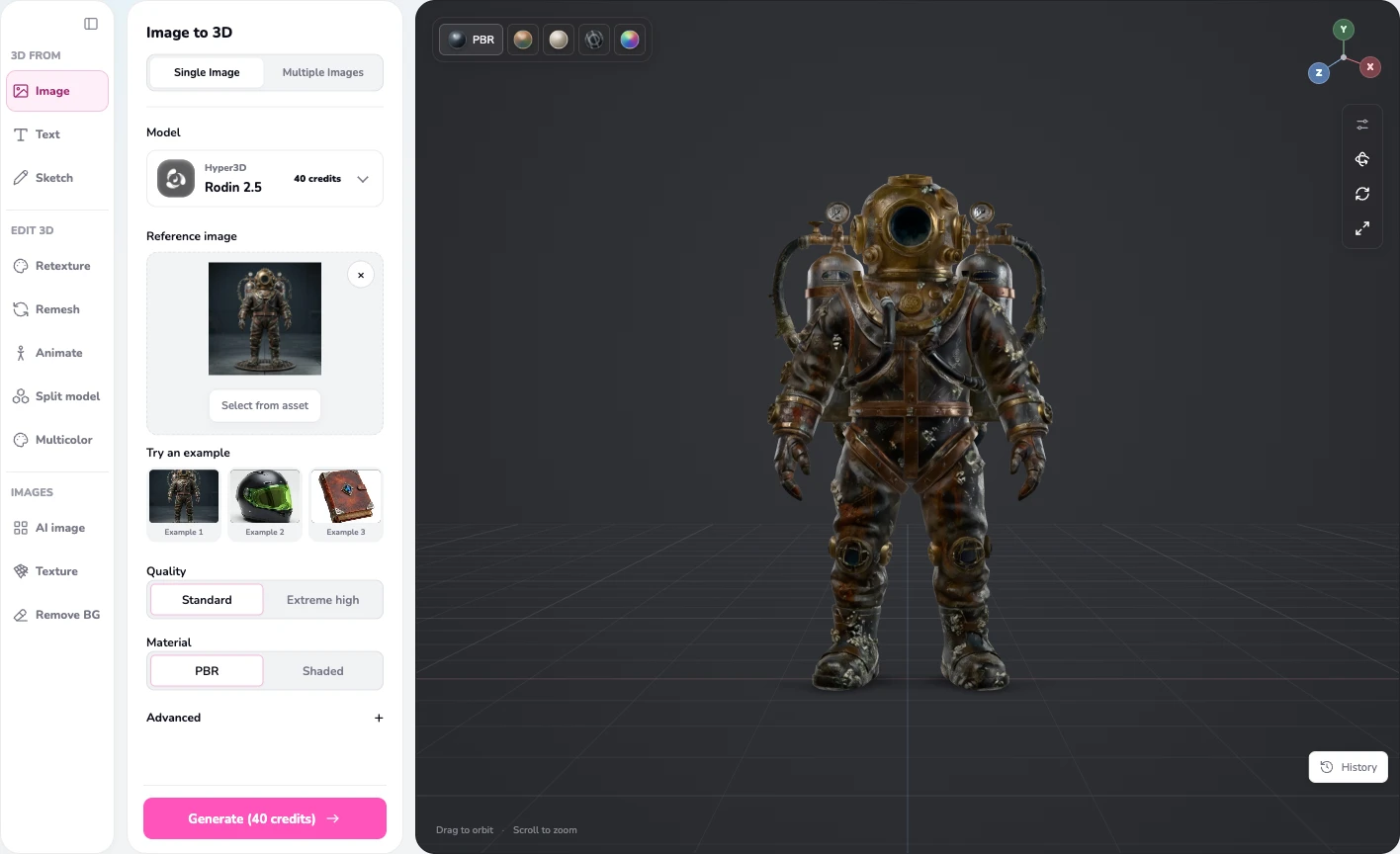
Quady3D brings several 3D model families into a browser workflow with preview, export and preparation guidance.
Loftsmith turns descriptions and measurements into parametric CAD, with printer-aware geometry checks and options to test a small section before printing the full part.

Kivo proposes eight visual directions from a reference and your content, then carries the chosen look through a full deck.